Facts About Nyungwe Forest National Park.
Facts about Nyungwe Forest National Park highlight what makes this destination extraordinary and worth visiting, attracting thousands of visitors from around the globe to experience its uniqueness. The park is situated in the western Great Rift Valley in Rwanda, also known as the Albertine Rift, stretching from Lake Albert to Lake Tanganyika. This rift valley features various lakes that flow west into the Congo River system, along with stunning mountainous landscapes.
The Albertine Rift is famous for its beautiful scenery and the endemic flora and fauna it hosts. Nyungwe National Park is particularly renowned for its biodiversity, boasting over 1,060 plant species, including 120 orchid species and 200 tree species. It is home to 120 butterfly species, of which 21 are Albertine endemics, and 40 species are endemic to Nyungwe Forest itself. The park also harbors over 85 mammal species and 13 primate species, accounting for 25% of the total primate population in Africa. Notable primates found in Nyungwe include chimpanzees, colobus monkeys, L’Hoest’s monkeys, blue monkeys, red-tailed monkeys, and vervet monkeys.
Furthermore, the park is rich in birdlife and serves as a significant birding site in Rwanda, with over 320 bird species residing here. Among them, 29 species are Albertine endemics that can only be found in Nyungwe Forest, such as the Regal Sunbird, Purple-breasted Sunbird, Albertine Owlet, Red-collared Mountain Babbler, and Blue-headed Sunbird.
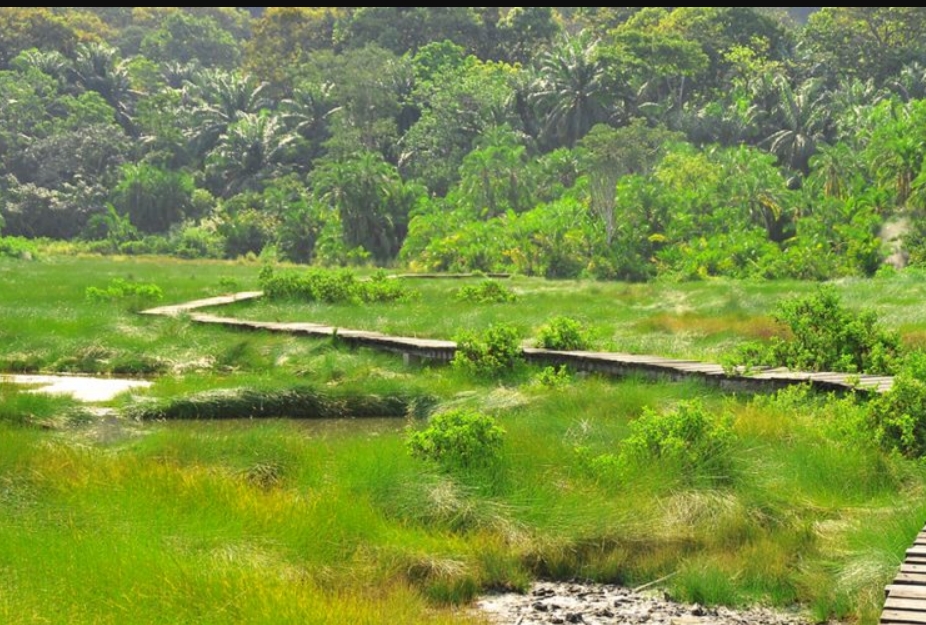
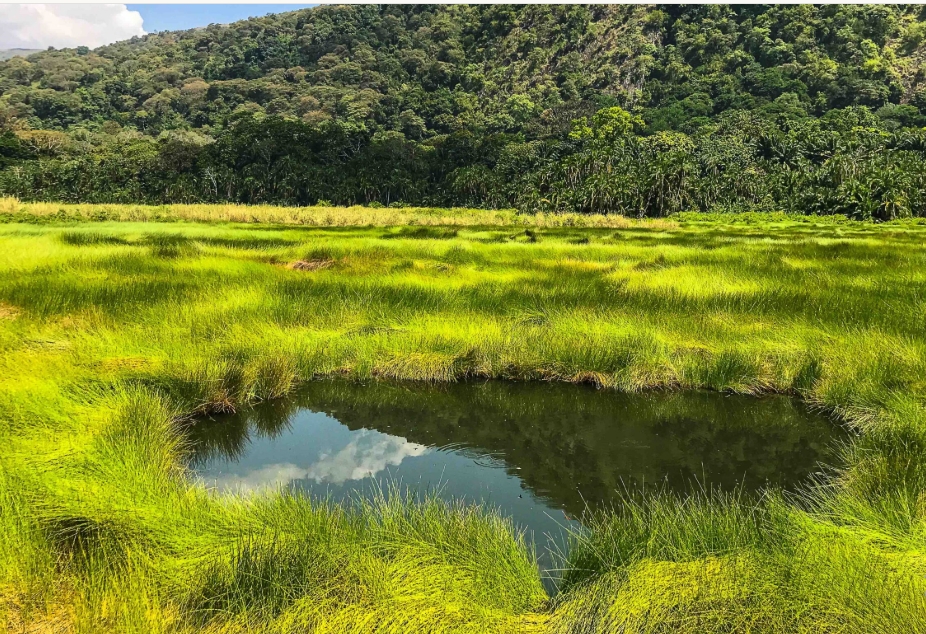
The park’s remarkable biodiversity is supported by various ecosystems, including marshes, montane forests, swamps, grasslands, and woodlands, all providing food and shelter for its inhabitants. This diversity makes Nyungwe Forest National Park one of the top tourist destinations in Rwanda, offering a range of activities for visitors to enjoy.
Location and Size- Facts About Nyungwe Forest National Park.
Nyungwe Forest National Park is located in southwestern Rwanda, specifically in the Albertine Rift region, bordering Burundi to the south and the Democratic Republic of Congo to the west. The park is contiguous with Kibira National Park in Burundi to the south. Covering approximately 1,020 square kilometers, it is one of the largest remaining montane forests in East Africa.
Nyungwe is classified as a high tropical montane rainforest, with altitudes ranging from 1,600 to 2,950 meters above sea level. The highest point in the park is Mount Bigugu, which rises to 2,950 meters. This elevation contributes to a favorable climate, resulting in an annual rainfall of about 2,000 millimeters and moderate temperatures.
Wildlife of Nyungwe Forest National Park.
Nyungwe Forest National Park is home to a remarkable variety of wildlife species. The park hosts over 85 mammal species and is known for its 13 primate species, making it one of Africa’s top destinations for primate enthusiasts. Among these primates are chimpanzees, colobus monkeys, blue monkeys, mona monkeys, red-tailed monkeys, olive monkeys, owl-faced monkeys, grey-cheeked mangabeys, and bush babies, among others.
The park is home to more than 500 habituated chimpanzees that are accustomed to human presence, making them ready for trekking adventures. Additionally, Nyungwe Forest boasts the largest population of habituated colobus monkeys, which can also be tracked. This park is the ideal location in Rwanda for primate lovers to get up close to a variety of primate species.
Birdlife- Facts About Nyungwe Forest National Park.
Nyungwe Forest National Park is a premier birdwatching destination in Rwanda and is recognized by Birding International as an important birding area. Bird enthusiasts will find a paradise here, as the park is home to over 310 bird species, including 29 species that are endemic to the Albertine Rift. Among the notable bird species that call Nyungwe home are the Red-collared Mountain Babbler, Yellow-eyed Black Flycatcher, Handsome Francolin, and Stripe-breasted Tit. Other interesting birds found in the park include Neumann’s Warbler, Red-throated Alethe, Mountain Masked Apalis, Dusky Crimsonwing, and Dwarf Honeyguide. The park also hosts the Purple-breasted Sunbird, Archer’s Robin Chat, Regal Sunbird, and Ruwenzori Hill Babbler, as well as the rare Ruwenzori Turaco and Shalley’s Crimsonwing. Additionally, birdwatchers can spot the Blue-headed Sunbird, Collared Apalis, Strange Weaver, Albertine Owlet, and Rockefeller’s Sunbird.
Conservation and Importance of Nyungwe Forest.
Nyungwe Forest is not only a natural wonder but also a vital conservation area of global importance. First protected in 1993 and later upgraded to National Park status in 2024, it was officially recognized as a UNESCO World Heritage Site in 2023. The forest is ci-managed by the Government of Rwanda and African Parks, ensuring long-term protection and community involvement. As part of the Albertine Rift, Nyungwe is one of the world’s richest biodiversity hotspots, home to endangered chimpanzees, rare colobus monkeys and many Albertine endemic birds. Beyond wildlife, it plays a crucial ecological role as Rwanda’s tower, feeding both the Nile and Congo River systems, while also storing massive amounts of carbon that helps combat climate change. Tourism in Nyungwe benefits nearby communities through jobs, revenue sharing and cultural exchange, making it a model of sustainable ecotourism.