A Guide to Wildlife Species in Semuliki National Park
A Guide to Wildlife Species in Semuliki National Park: Semuliki National Park is among the rare destinations in Uganda that offer visitors unique and diverse adventure safaris due to the unique attractions such as wildlife that include both animals and birds. Semuliki National Park may not offer the same wildlife concentration especially the big game mammals in relation to other parks like Murchison Falls, Queen Elizabeth and Kidepo Valley National Park, but its wildlife diversity is one of its outstanding attractions.
The park is located in western Uganda along the border with the Democratic republic of Congo, covering over 220 Sq. Km. Semuliki hosts over 53 mammals, 443 bird species, 448 butter flies and 9 primates. Some of the mammals to see in Semuliki National Park include forest elephants, buffalos, antelopes, primates, rodents, bats and others mammals.
Some of the fascinating mammals to see in the park include;
Forest Buffaloes
A Guide to Wildlife Species in Semuliki National Park: Forest buffalos in Semuliki National Park are quite smaller compared to the common cape buffalos that are widely distributed in most of the country’s savannah parks such as Murchison Falls and Queen Elizabeth National Park. Their existence embraces the Central African character of Semliki’s ecosystem. For nature lovers, encountering and studying how this forest buffalo differ from the cape buffalos is one of the unique experiences that sets Semuliki nature walk apart from the normal game drive.
Water Chevrotain
This water chevrotain is among the small ungulates of a kind that is normally found in Semuliki National Park and rarely seen in other parts of the country, making it one of the park’s most compelling mammals. Being associated with the thick vegetation cover and their secretive nature, these rare forest ungulates are hard to see, hence particularly important and one of the park’s species that is restricted to Semuliki and occurring no where else in the entire East African region. To nature lovers, you may not only visit Semuliki for a diverse animal species but instead to explore species of this nature and its unique ecosystems that are rarely seen anywhere else.
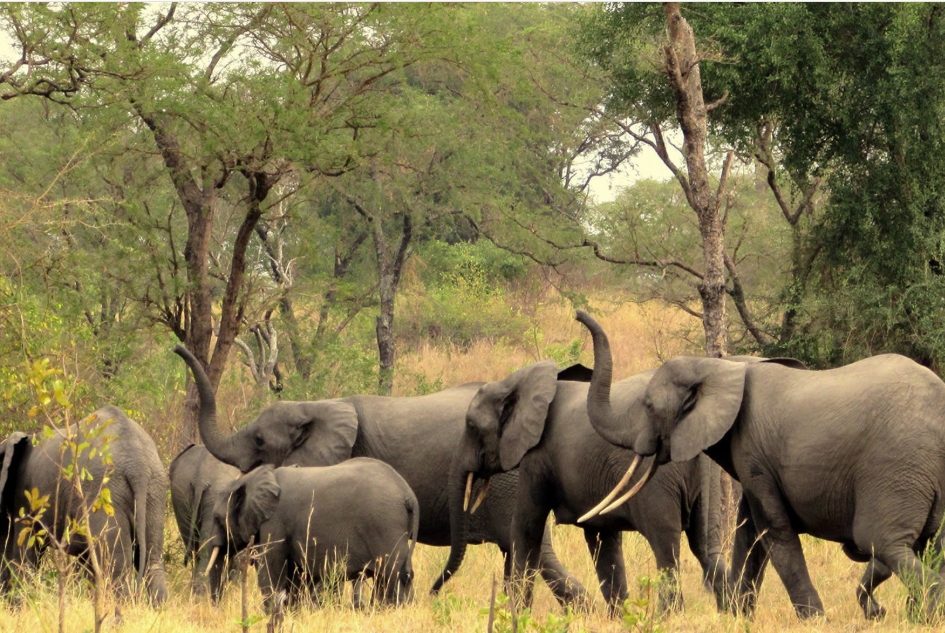
Forest Elephant
A Guide to Wildlife Species in Semuliki National Park: This African forest elephant is one of the most captivating animals that is associated with Semuliki National Park. These forest elephants are adapted to the thick and tropical rain forest sorroundings compared to the larger savannah elephants that are familiar to the plain grasslands. They are typically smaller in size that supports their movement traversing the thick vegetation. A sighting of an elephant in Semuliki is quite interesting and different from the ordinary game drive.
Instead of standing near a vast open savannah grasslands, nature lovers and visitors may come across evidence of elephants moving through forest habitat, for instance dung, feeding signs, tracks, or by luck, elephants themselves. This is indeed a paramount distinction for travellers planning a safari to Semuliki National Park.
Semuliki National Park is not mainly an elephant-viewing destination in the same way as Murchison Falls National Park and Queen Elizabeth National Park. However, its value lies in the unique forest surroundings in which these animals occur.
Duikers
Basing on their packed bodies and careful behaviours, these medium sized antelopes adapted to roam through the thick vegetation across the tropical rain forests. The best way to see these unique animal species is during the forest walks even when they remain hidden.
For nature enthusiasts and photographers, a quick look of a duiker fading into the undergrowth can be quite interesting and memorable as seeing a big game animal in an open plain.
Bushbucks and other Antelopes
The park also supports other unique forest-adapted antelopes and mammals within its ecosystem. A blend of tropical rain forests, riverine forests, wetlands and open areas form unique habitats within a relatively compact area. Therefore, many of these animals and other wildlife species utilise such habitats in search for food, water and shelter. This means that the guided nature or forest walk offers visitors a chance to understand how various wildlife species use various layers of the forest than just a mere hike through trees.
Primates to See in Semuliki
Primates are a group of animals that can offer visitors a rewarding experience in Semuliki national Park. The park is home to over 11 primate species which are believed to live within 6 kilometers of Sempaya from its park information centre. Some of the primates to see include blue monkeys, red-tailed monkeys, grey-cheeked mangabeys, black and white colobus monkeys, pottos, olive baboon, dent’s mona monkeys, de brazza’s monkeys, bushbabies, vervet monkeys, among others.
Red- tailed Monkeys
A Guide to Wildlife Species in Semuliki National Park: These are some of the primates’ visitors should expect to see in Semuliki National Park. During your forest walks, you stand higher chances of encountering these unique red-tailed monkeys as you explore the beauty of the park environment. These primate species are canopy dwellers quick and skilful with their hands. Often times they can be recognised by their traits and facial markings and the long reddish tail.
During your forest walk, keep your eyes out in the tree branches, moving overhead or vocalization coming from a troop of monkeys can exhibit their presence before you spotting them.
Black and White Colobus Monkeys
The vibrant black and white colobus monkey is one of the unique primate species, visitors can see in Semuliki National Park by either their calls or movement. What makes this primate unique is the blend of its contrasting and striking black and white colours, making it easily identified during your forest walks in the park. In particular, the black and white colobus monkeys are fascinating because they are well adapted to forest life particularly in tree canopy.
De Brazza’s Monkey
This is another unique Semuliki primate species that is greatly associated with the Central African forests. The existence of this distinctive de brazza’s monkey illustrates how the park’s geographical lowland zone position brings the Central African biodiversity into Uganda.
Grey-cheeked Mangabey
This is also a unique primate species that is greatly associated with Semuliki National Park. What makes these primates quite challenging is that their sighting is hectic, this means that seeing them may become a little difficult since often times they traverse through the dense jungle and various forest patterns. Therefore, for nature lovers and primatologists this adds an ingredient of discovery to the excursion since the forest does not automatically uncover its unique wildlife right away.