Best Trails to See Wildlife in Semuliki
Seeing wildlife in Semuliki National Park is closely associated with forest trails and various park habitats. This blog will discuss about the best trails to see wildlife in Semuliki National Park. It is located in western Uganda on the border with the Democratic Republic of Congo within the western East African Rift Valley. The Semuliki Valley’s rich biodiversity, defined by its lush and productive lowland tropical forests, wetlands, and rare wildlife.
Generally, the crucial reason to explore wildlife in Semuliki is the chance to encounter unique wildlife species within this lowland lush tropical rain forest. The park has two main forest trails including the long Kirumia forest trail and the Sempaya nature trail.
Sempaya Nature Trail
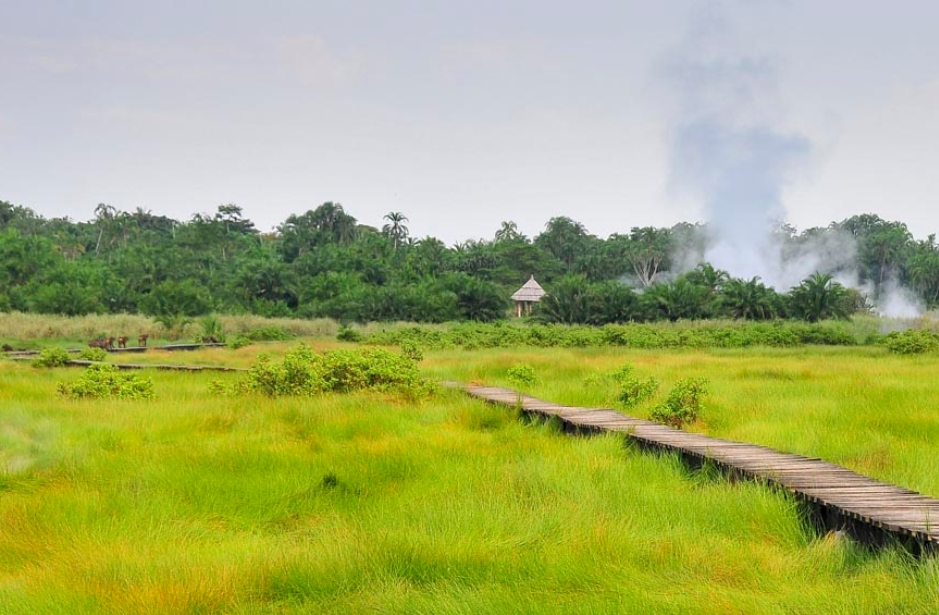
This is the most popular nature trail covering over 8km which majority of the tourists use due to its unique physical features, including the hot springs, vegetation cover and several bird species. This 2–3-hour nature walk trail is partitioned into two the female hot spring trail and the male hot spring.
The female hot spring trail takes about 30 – 45-minute walk from the famous Sempaya ranger station. This nature trail will take you through the lush palm forest which will introduce you to wildlife species such as black and white colobus monkeys, red-tailed monkeys, vervet monkeys and several forest birds.
After the forest walk you will come towards the female hot spring commonly known as Nyansimbi. Its waters always boil at about 103c and this has attracted visitors always to carry out some demonstration of boiling some food stuffs such as matooke, eggs and meat wrapped in Luwombo, among others. Here, most photography is done at this main spot.
The Male Hot Spring Trail commonly known as Bitente is longer compared to the female hot spring and takes over an hour from Nyansimbi, the female hot spring. This nature trail passes through a scenic swampy forest which leads you to the male hot spring, awide 12 metre pool of bubbling water. However, this male hot spring is less hot than Nyansimbi, the female hot spring but more dramatic.
This trail is good for day trips offering an experience that is good particularly for birders, nature lovers, first time visitors and those travellers with limited time, among others.
Kirumia Trail
The Kirumia Trail is one of the best trails to see wildlife in Semuliki National Park which offers the genuine forest adventure experience, and according to nature lovers and birdwatchers it is considered the best trail. It is a 13km nature forest walk that takes visitors into the heart of the forest towards the Semuliki River. This 6- 8-hour trail is not challenging as most people expect it, however some times it gets muddy and slick hence a ranger guide is very crucial to offer guidance and protection during the experience.
This Kirumia forest trail begins at Kirumia village which takes you direct to the lush jungle where you may not miss out to see wildlife species such as primates particularly the De Brazza’s monkey, a rare monkey species that is only found in other parts of East Africa. This means that Semuliki is one of the few places in East Africa that are gifted with this species and visitors who wish to see this primate in Uganda, Semuliki National Park is the only destination where one can see the De brazza’s monkey.
Other primates to see in this nature trail include dent’s mona monkey, vervet monkey and some chimpanzees, however you may hear their calls but rarely seen.
Bird Species
The park is one of the top birding destinations and home to over 443 bird species mainly dominated by forest birds particularly rare Guinea-Congo biome species such as Nkulenge Rail, Black-wattled Hornbill, Congo Serpent Eagle, and others.
Other birds to see in Semuliki National Park include white-throated blue swallow, red-chested cuckoo, African sacred ibis, Brown-chested alethe, hairy-breasted barbet, Blue-headed coucal, shoebill, yellow-throated cuckoo, Klaas’s cuckoo, yellow-throated tinkerbird, little greenbul, African grey parrot, grey-crowned crane, Ayres’s hawk, African palm swift, wahlberg’s eagle, mountain buzzard, brown snake eagle, black-winged stilt, white-crested hornbill, eagle can all be seen in the Bwamba forest.
Shinning blue kingfisher, grey headed sunbird, yellow billed stork yellow breasted forest robin, African woolly necked stork, Chocolate backed kingfisher, olive sunbird, Lizard buzzard, red billed dwarf hornbill, Common sandpiper, blue spotted wood dove, African pied hornbill, blue cheeked bee eater, barn swallow, lesser stripped swallow, little egret, white spotted flufftail, green white eye, white thighed hornbill, spur winged Lawping, grey kestrel, piping hornbill, African harrier hawk, long crested eagle, bronze naped pigeon.
How to Get to Semuliki National Park
Semuliki National Park can be accessed by visitors both by air or by car. Travellers typically take the road to go to the park from Kampala or Entebbe, passing through Mityana, Mubende, Kyegegwa, Kyenjojo, Fort Portal, and Bundibugyo. Travellers have a fantastic perspective of the many sites along the way, and the trip takes five to six hours.
Any of the regional airlines, such as Bar Aviation Uganda and Aerolink Uganda, are still available to those who wish to take flights to Semuliki National Park. These airlines operate flights to Kasese Airstrip from Entebbe Airport and Kajjansi Airstrip. Travellers would need to spend many hours travelling by road from Kasese airport to Semuliki National Park.
Best Time to See Chimpanzees of Semuliki National Park
Best Trails to See Wildlife in Semuliki: Chimpanzees can be seen by visitors to Semuliki National Park throughout the year, however certain months are better than others. The greatest times to see chimpanzees in Semuliki National Park are during the dry season, which runs from June to September and December to February. This is because to the trekking routes’ dryness and ease of traversing, as well as their short foliage and favourable chimpanzee views.
When visiting Semuliki National Park during the wet season, visitors can still spot chimpanzees. Travellers should be aware that there is a lot of rain and little sunshine during the rainy season, which runs from March to May and October to November. Trekking trails are muddy and slick during the rainy season, and the dense undergrowth makes it difficult to see certain chimpanzees.