Primate Trekking in Bwindi Impenetrable National Park
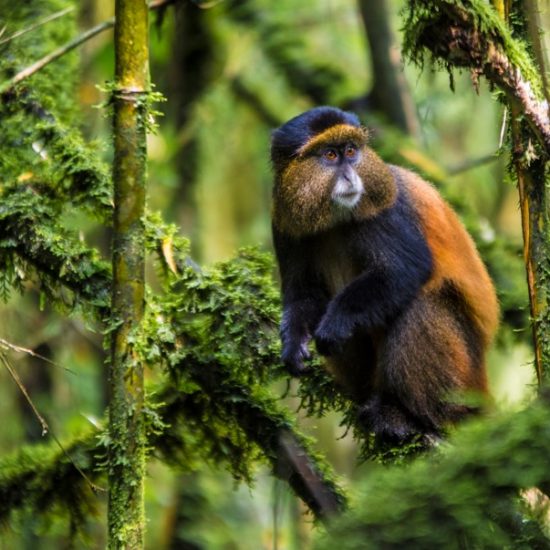
Bwindi Impenetrable Forest National Park is a major destination in southwestern Uganda, known for its rich wildlife, including endangered mountain gorillas and various monkey species. It is one of the few places in Uganda to see these rare apes. The park is also home to other primate species such as blue monkeys, red-tailed monkeys and black and white colobus monkeys, and many others. This makes it unique, as a shared habitat for unique primates that offer primate trekking safaris that entail mountain gorillas, chimpanzees and several monkey species.
When was Bwindi Impenetrable Forest established
In 1991, the Ugandan government gazetted Bwindi to protect the area’s vegetation, other park animals, and the critically endangered mountain gorillas. The national park is home to about 700 mountain gorillas and more than ten other species of primates. Beyond the primate trekking in Bwindi, the park is home to more than 120 animal species, 350 bird species, and 51 reptile species. One of Bwindi’s most well-known primates is the endangered mountain gorilla. The gorillas are the reason visitors come to the national park from all over the world. Because they are believed to be closely related to humans, they are eager to encounter mountain gorillas.
Compared to other gorilla species, mountain gorillas, a subspecies of eastern gorillas, have longer, thicker fur. Because of their thick coats, these mountain gorillas can survive in bitterly cold climates at high elevations. Mountain gorillas usually live in groups of five to thirty, with the dominant silverback always acting as the group leader. Chimpanzees, grey-checked mangabeys, red colobus monkeys, olive baboons, blue monkeys, red and black monkeys, L’hoest’s monkeys, potto, galago, and Demidoff’s galago are among the primates that may be found in the park after the seven wonders of Bwindi. Mountain gorillas are also there. Despite their lack of hiking experience, these primates are seen taking part in several of the park’s primary activities, including nature hikes, bird watching, and trekking alongside mountain gorillas.
Trekking mountain gorillas in Bwindi
Primate trekking in Bwindi can be seen in four sectors of Buhoma, Ruhija, Rushaga, and Nkuringo. Mountain gorilla trekking is the main activity in each of the park’s four areas, each of which has its own habituated mountain gorilla family. Gorilla habituation, when trekkers spend four hours with mountain gorillas, is only available in the park’s Nkuringo and Rushaga districts. Trekking mountain gorillas starts at the headquarters of each sector early in the morning. Trekkers must first learn about and become accustomed to the customs and protocols that govern mountain gorilla trekking, a process called habituation. The park wardens use armed ranger escorts to guide group trekkers through the forest. The hikers are guided by the armed ranger through the park’s many challenges until they reach the mountain gorilla family.
Searching for these primates and other Bwindi treasures can take 2-7 hours, but in that time, you will see a range of park mammals, birds, and primates such as blue, red-tailed, black, and white colobus monkeys and many others. Trekkers spend an hour with the mountain gorillas after locating the family they wish to see. They can take pictures, witness people going about their daily lives, and discover their traditions during this time. Trekkers are given the chance to spend four hours with gorillas and engage in activities with them to help the primates become accustomed to human life.
Cost of primate watching in Bwindi
A gorilla permit is needed to see the mountain gorillas in Bwindi. There are two types of permits: one for trekking, allowing visitors to spend one hour with the gorillas, and another for habituation, allowing four hours. Anyone over 15 can apply through the Uganda Wildlife Authority. Trekking permits cost $800 for non-residents, $700 for foreign residents, and $300,000 for East African locals. Habituation costs $1500 for non-residents, $1000 for residents, and UGX750,000 for East Africans.
Best time to go for primate trekking in Bwindi
You can visit Bwindi to see mountain gorillas year-round, but the best time is during the dry season, from June to September and December to February. This time has little rain, making trekking paths easier to navigate and offering great views of the animals due to thin foliage. During the rainy season, from March to May and October to November, the park remains open and offers lower lodging rates to attract visitors, though trails can be muddy and slippery. Despite this, 4×4 safari vehicles can help navigate the conditions.