Caracal, the Elusive Wild Cat
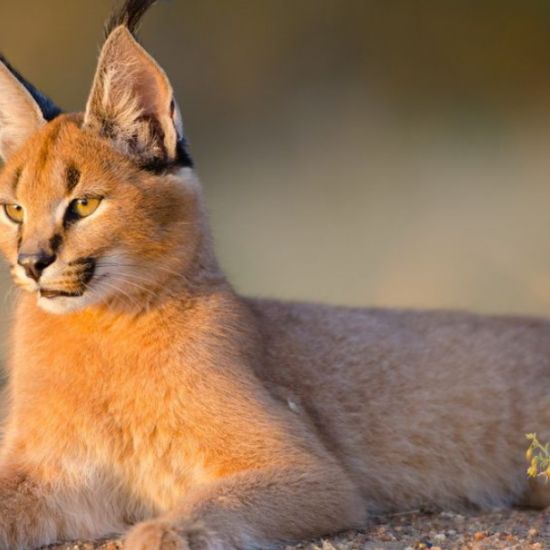
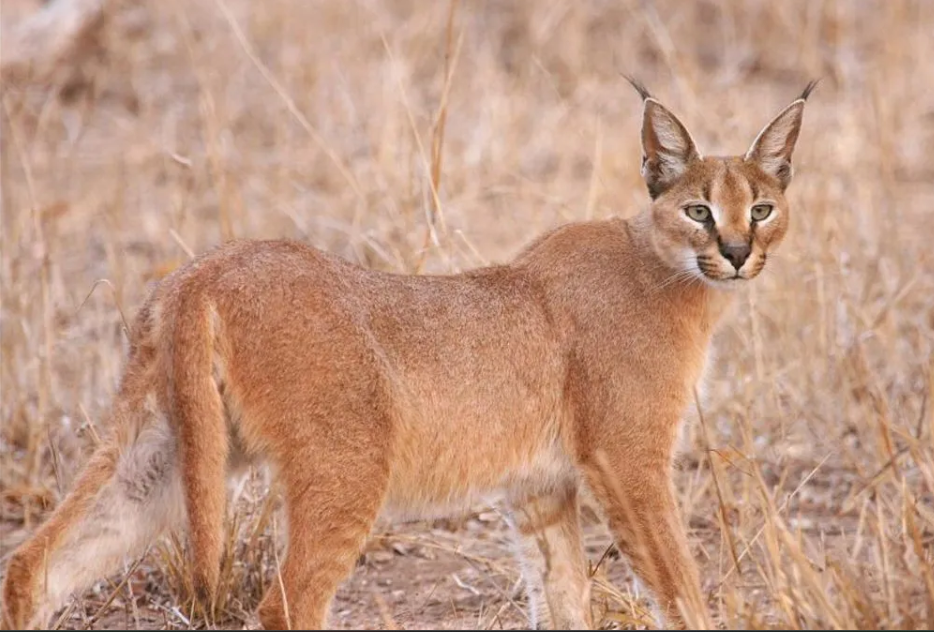
The caracal is a medium-sized cat often confused with lynxes because of its ear tufts, but it doesn’t have the facial ruff typical of lynxes. It has a short, dense coat that is usually tawny-brown or brick-red, with some rare all-black individuals. Caracals are known for their sleek bodies, short reddish-gold coats, and facial markings. They are the largest and fastest of the small cats in Africa and are also known as the desert lynx.
Where does it get its name?
This elusive wild cat is known for its large ears, which have black tufts about 1.75 inches long. The name “caracal” comes from the Turkish word “karakulak,” meaning “black ear.” These slender predators stand 16 to 20 inches tall at the shoulder and have strong legs for jumping. Their family relationship is unclear, but they are thought to be related to servals and golden cats. Caracals live in drier areas of Africa and the Middle East, while servals prefer wetter habitats.
The caracal is easily recognized by its long, black ear tufts. These tufts may serve multiple purposes, such as keeping flies away or helping with camouflage in grass. The most common belief is that the tufts are used for communication with other caracals.
Habitat and Distribution
The caracal is found widely across Africa, the Arabian Peninsula, Central Asia, and India. They are common in Southern and Eastern Africa but are becoming rarer in North Africa, the Middle East, and Asia.
These adaptable cats live in various environments such as dry woodlands, semi-deserts, and scrublands, preferring arid areas with enough cover for hunting. They do not inhabit true sandy deserts or tropical rainforests and can be found at high elevations up to 3,300 meters.
The caracal lives in Africa, the Middle East, and India, thriving in tough environments like savannas and dry mountains. They are skilled hunters that eat meat, primarily hunting at night for prey like mongooses, rodents, and even larger animals like impalas. Caracals have remarkable jumping skills, being able to leap up to 10 feet to catch birds and even jump onto a sitting ostrich.
Caracals keep their claws sharp for catching prey and may climb trees to store their food for later. They can be top predators in their habitat, but larger carnivores like lions or painted dogs can be a threat. At the San Diego Zoo, caracals have a meat-based diet and receive fish and a mouse weekly.
Behavior
Caracals communicate like other small cats by purring when happy and using various sounds like mews, growls, and hisses to show their feelings. They are mostly quiet but can cry out like leopards if necessary.
When uneasy, caracals make a “wah-wah” sound. They also use scent to communicate, with glands on their toes and face. Caracals sharpen their claws on trees to mark their territory with both visual and scent signals.
Caracals are mostly solitary animals that defend their territory. They only come together to mate, and males do not help raise the young. Caracal mothers create dens in abandoned burrows.
Kittens are born small and helpless, with closed eyes that open after about 10 days. They start eating meat at 1 to 2 months old and learn hunting from their mother. Their permanent teeth come in at four to five months, but they leave their mother around one year of age.
Threats to Caracals
Caracals often kill small livestock in farms such as sheep, goats, and poultry birds, which leads farmers to kill them in retaliation. More still, this cat kills small wild animals and birds as well; these include antelopes such as dik-dik, duiker, impala, rodents, and others.
These amazing cats are commonly hunted for their skins and meat, seen as luxury items in some cultures, and there is a growing illegal exotic pet trade targeting them. Despite being widely spread, caracals face pressures that threaten their populations, including road kills and attacks by domestic dogs. Habitat destruction due to agriculture, urban growth, and desertification further endangers them.
Conservation
Caracals have been associated with humans for centuries, particularly in India and Persia, where they were used for bird hunting contests. Owners would often boast of their cat’s ability to catch multiple pigeons, leading to the saying “to put a cat among the pigeons.”
Today, caracals can be viewed as pests, as they sometimes hunt livestock during difficult times, prompting ranchers to shoot them. Despite this, caracals help control small herbivore populations that compete with livestock.
Unfortunately, Asian caracal numbers are declining, and new solutions are needed for coexistence. Supporting conservation areas like the San Diego Zoo Wildlife Alliance aids in wildlife protection.