How to Choose the Right Gorilla Family for Trekking in Bwindi
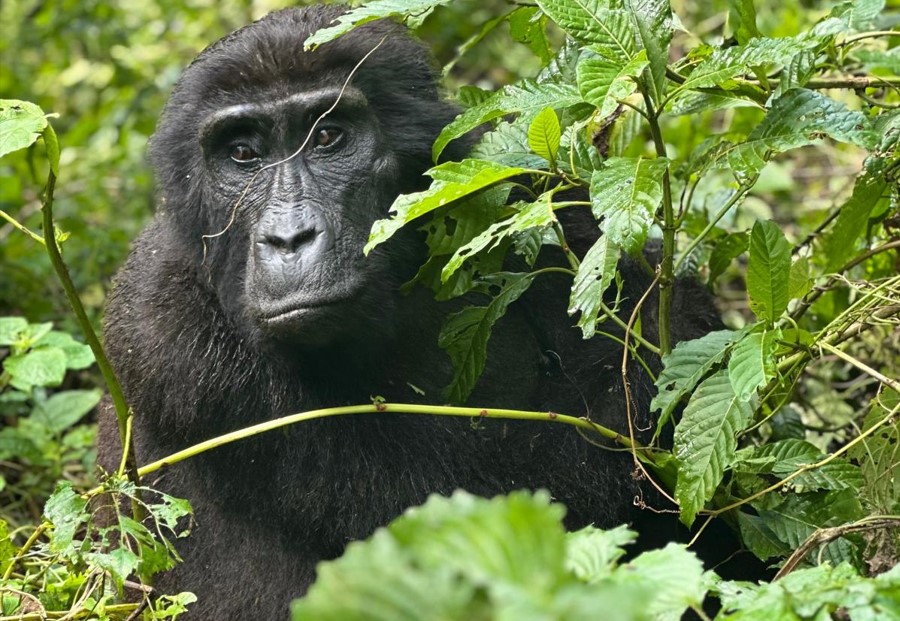
If you are planning a gorilla trekking safari and wondering how to choose the right Gorilla family for trekking in Bwindi Bwindi and this article will guide you. Bwindi Impenetrable Forest National Park is home to half of the world’s mountain gorillas, with more than 21 mountain gorilla families, of which 19 are available for gorilla trekking and two are available for habituation. This has attracted many tourists globally to come and witness these gentle giants, which are believed to share 98% DNA with humans. Trekking mountain gorillas in Bwindi is carried out in the four sectors that make up Bwindi, and these include Buhoma, Ruhija, Rushaga, and Nkuringo, all offering excellent trekking experiences. Travellers planning to visit Uganda for gorilla trekking have an opportunity to choose the right gorilla family depending on the nature of experience desired and the length of your stay, among others, as discussed below.
How to Choose the Right Gorilla Family for Trekking in Bwindi
Over 700 mountain gorillas can be found in the Bwindi Impenetrable Forest National Park, some of which have been domesticated to become accustomed to human presence. Many visitors who have heard about the more than 21 mountain gorilla families in Bwindi are excited to go hiking with specific groups. Some people are also interested in trekking with the easiest or most difficult mountain gorilla groups. To answer the question, visitors never get to choose which mountain gorilla family to walk with; park wardens make that decision. Park wardens take into account the ages and physical capabilities of trekkers before putting mountain gorilla families on treks.
Elderly and physically unfit people are usually assigned to the easiest mountain gorilla families, whereas young, energetic visitors are usually assigned to the most difficult families. Travellers should be informed that gorilla family allocation is done on the day of trekking because wardens can select which families are easier to trek on that specific day, since trackers enter the jungle first to find out where the gorillas have last nested. Trekking the mountain gorilla family of one’s choice is only possible during the rainy season, when the park is less crowded, and with a gorilla permit from the gorilla trekking district where the family one wants to trek lives. Industry reports state that gorilla licences are offered for sale by Uganda Wildlife Authority.
For example, if your gorilla ticket is suitable for Nkuringo and you want to walk with a family of gorillas there, your driving guide will likely ask park wardens to choose a family for you. If you want to see a Nkuringo gorilla family and you are allowed to visit the Rushaga zone, you will have to trek gorilla families in the area that your gorilla permit specifies. When visiting Bwindi Gorilla Park, visitors who have specific mountain gorilla families they would like to trek should make sure they reserve their permits well in advance so they can choose which gorilla trekking spots they prefer to visit. If your driving instructor speaks with the park wardens to identify for you a given gorilla family.
Gorilla trekking experience
You will begin with a briefing at the sector offices early in the morning, and after that, you will be allocated a gorilla family, and after gorilla trekking officially begins. Armed rangers lead trekkers into the jungle, where they search for a family of gorillas for 2 to 6 hours. A gorilla family’s location and the trekkers’ speed determine how long it takes to locate them. After they are located, armed rangers let trekkers spend an hour with the mountain gorilla family so that they may see their daily activities, take photos, and explore their customs. After spending an hour with the mountain gorillas, trekkers slowly leave the group and exit the bush back to the information offices.
How many people are permitted to trek with a gorilla family
A completely habituated mountain gorilla family can travel with up to 8 people in Bwindi, whereas a semi-habituated mountain gorilla family can hike with up to four people. With 19 mountain gorilla families in Bwindi and two semi-habituated families that can accommodate eight people each, more than 152 people can trek with the mountain gorillas.
What is the cost of a Bwindi gorilla permit- How to Choose the Right Gorilla Family for Trekking in Bwindi
In Bwindi National Park, visitors who want to witness mountain gorillas in their natural habitat must obtain a gorilla permit. The average cost of a gorilla trekking permit is $800 for non-foreign residents, $700 for foreign residents, and UGX300,000 for citizens of East Africa. In Bwindi, a gorilla habituation permit costs $1500 for non-foreign residents, $1000 for foreign residents, and UGX750,000 for East Africans.
What is the best time to visit gorillas in Bwindi National Park
Bwindi National Park is open all year round for visitors who wish to spend time with mountain gorillas, though some months are better than others. During the dry months of June through September and December through February, gorilla trekking is most pleasurable. The park’s roads are in good condition, the vegetation is sparse and short, offering breathtaking views of the mountain gorillas, and the trekking routes are muddy and slippery from little to no rainfall.
Tourists, especially those on a tight budget, can visit Bwindi National Park and see mountain gorillas while also taking advantage of substantial housing savings during the rainy seasons of March through May and October through November. The park’s roads are in bad condition during the rainy season, the tall, dense foliage makes it hard to see the mountain gorillas, and the trekking trails are muddy and slippery from too much rain.
What to carry on a gorilla trip in Bwindi
It is recommended that travellers who intend to go gorilla trekking in Bwindi National Park pack long-sleeved shirts, long-sleeved pants, a rain jacket, gardening gloves, waterproof and hiking shoes, long cotton sticks, a pair of gaiters, sunscreen, extra batteries, insect repellents, a camera, a pair of binoculars, brimmed hat, drinking water bottle, energy-boosting snacks, and a lightweight backpack.