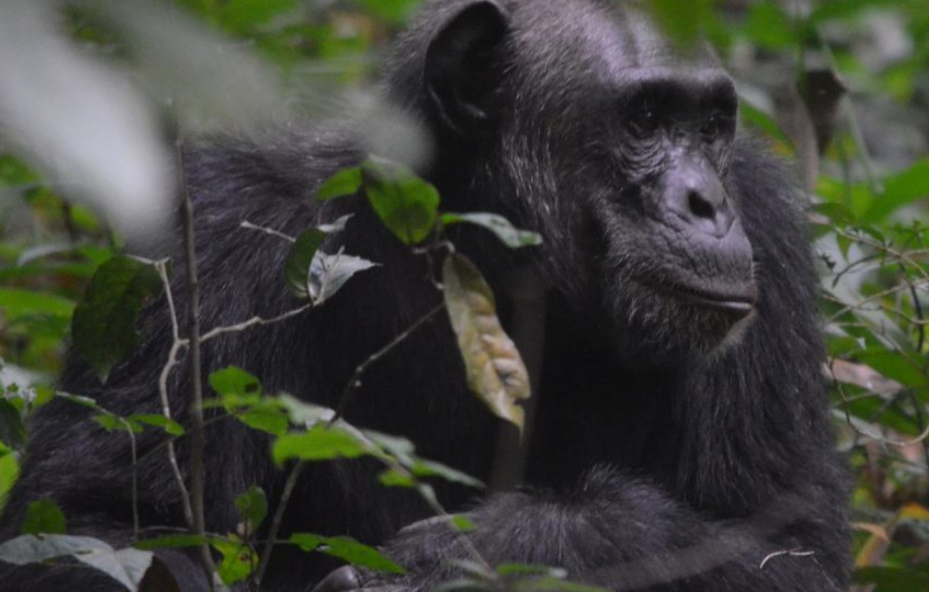
Why do Chimpanzees Drum on Tree Roots
Why do Chimpanzees Drum on Tree Roots: Travellers frequently wonder if chimpanzees have distinctive drumming techniques. Well, Chimpanzees are among the world’s most intelligent creatures. Chimpanzees and bonobos are closely related to humans because they all descended from the same ancestor approximately 6-7 million years ago and have comparable coding genes, as evidenced by their 98% DNA similarity.
For everyone inside to know who is praying, chimpanzees have a distinctive style in which drummers blow out their chests, give a guttural roar, then approach their kits and pound down their hallmark rhythms with ferocity. The chimpanzee is the drummer, and the drum equipment is the enormous gnarled root of a tree in the Ugandan rainforest.
According to a study, chimpanzees have distinct musical tastes; some favor simple rock beats, while others groove to more free-form jazz. If they don’t want to show where they are, they can also conceal their trademark sound. Following the Waibira chimpanzee group in the Budongo Forest in western Uganda, the researchers recorded seven male chimpanzees’ drum sessions and examined the pauses between the beats.
Why do Chimpanzees Drum on Tree Roots: The sound, which travels almost a kilometer through the dense forest, was primarily produced by the chimps using their feet, though they also used their hands. According to Vesta Eleuteri, the lead author of the study published in the journal Animal Behaviour, the drumming acts as a sort of social media, enabling travelling chimpanzees to connect with one another.
The PhD candidate claimed that after spending a few weeks in the rainforest, she was able to identify the drummer. “Tristan, the John Bonham of the forest, makes really fast drums with many even separated beats,” she remarked, alluding to Led Zeppelin’s renowned hard-hitting drummer. Tristan’s drumming “is so quick that his hands are scarcely visible.” Eleuter spoke.
Hiding their Style- Why do Chimpanzees Drum on Tree Roots
However, according to British primatologist Catherine Hobaiter, the study’s principal author, other chimps, such as Alf or Ila, create a more syncopated rhythm by utilizing a technique in which both of their feet strike a root nearly simultaneously. A number of the chimps are named after Scottish single malt whiskey, including IIa for Cao Lla and fellow ape Talisker. The research team was headed by scientists from Scotland’s University of St Andrews.
Chimpanzees have long been known to drum, according to Hobaiter, who initiated the Waibira group’s habituation in 2011. She told AFP, “But it wasn’t until this study that we discovered they’re employing these characteristic patterns when they’re travelling, when they’re alone or in a small group, or when they may be looking for other persons.” Additionally, the researchers found that the chimps occasionally decide not to drum in their distinctive rhythm in order to conceal their identity or location.
Hobaiter remarked, “They have this amazing ability to express their uniqueness and their flair, but sometimes they keep that disguised.” Michael Wilson, a chimpanzee expert at the University of Minnesota who was not involved in the study, felt the methodology was sound. However, he stated that some rhythms appeared to be very similar, thus he was not “totally sure, though, that the drumming is sufficiently distinctive that you could reliably distinguish all persons separately,” urging further investigation.
A Sense of Music
Why do Chimpanzees Drum on Tree Roots: Although many animals make noises that we consider to be musical, such birdsong, the study may suggest that chimpanzees appreciate music on a level that is typically believed to be exclusive to humans. According to Hobaiter, “I do believe that chimpanzees, like humans, may have a feeling of rhythmicity, a sense of music, something that strikes them on an almost visceral level, much as we might have a sense of wonder when we hear an outstanding drum solo or another form of dramatic musical sound.”
Most research on the culture of chimpanzees has looked at their tools or food, she said.
She continued, “But when we think about human culture, we don’t think about the instruments we use; instead, we think about how we dress and the music we listen to.” Researchers will then look at the various drumming styles used by nearby and distant chimpanzee tribes. In Guinea, where there aren’t many trees to live in the wide savannah, Hobaiter has previously been studying chimpanzees. She stated, “We have early indications that they might be throwing rocks against boulders” to create sound.