Uganda’s Fox’s Weaver
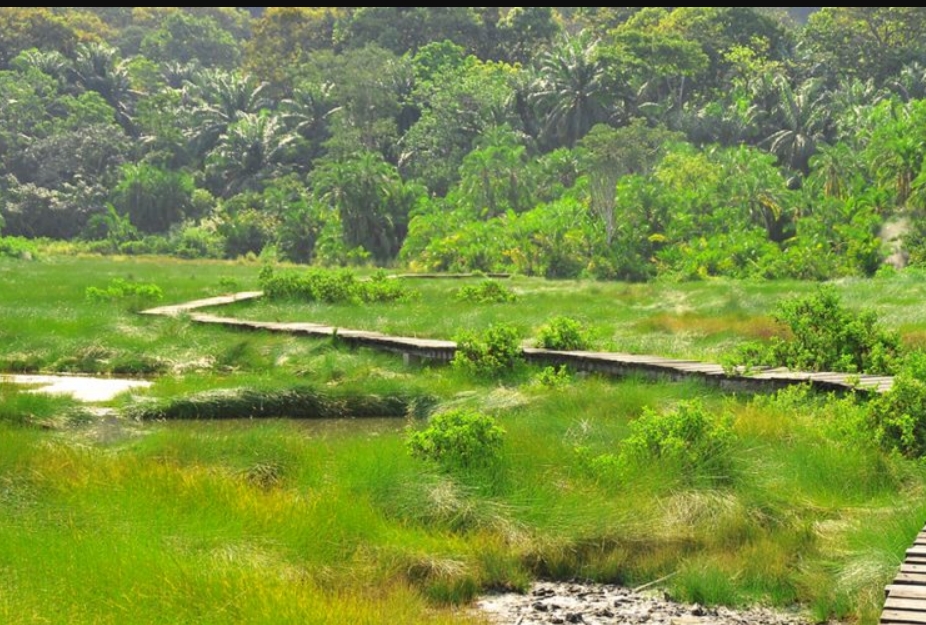
The Uganda’s Fox’s Weaver, an endemic bird species found in eastern areas like Lake Opeta and Bisina, flourishes in wooded grasslands, lakes ringed with papyrus, and wetlands that always experience floods. It is listed as Near Threatened and has seen nesting pairs near Lake Bisina in May 2018, suggesting an increase in numbers. Despite its challenging terrain, birdwatchers find the effort worthwhile due to its unique characteristics. However, more research is still needed for conservationists and researchers to have enough knowledge about its distribution range and also find protection measures concerning its ecology.
Uganda’s Fox’s Weaver is an endemic bird species, meaning, in the whole of East Africa, it is limited to Uganda only. The Fox’s Weaver is listed as Near Threatened. Particularly in the eastern areas like Lake Opeta and Bisina, it flourishes in habitats like wooded grasslands, lakes ringed with papyrus, and wetlands that flood seasonally. Although more research is needed, nesting pairs were observed close to Lake Bisina in May 2018, which may indicate a possible increase in their numbers. Because of the challenging terrain, it can be difficult to find the Fox’s Weaver, but the effort is ultimately worthwhile for birdwatchers.
The last record of it dates back to 1996, when breeding individuals were discovered at Lake Bisina. It has been found reproducing again in the last two years in new locations within the Lakes Bisina-Opeta basin. Additional breeding colonies were discovered during an expedition in August 2019 in previously unidentified areas of the periodically flooded plains in the area. Primarily found in the Teso Sub-region, Uganda is home to the Fox’s Weaver, a birding paradise with over 1,060 species.
The species, which prefers papyrus swamps with surrounding trees for breeding, has not been well investigated. It has been observed in wetlands close to Lake Opeta, Kyoga, and Bisina. The species mostly breeds during the main rainy season, and it is believed to travel further north to South Sudan during the dry season.
The species was initially observed during reconnaissance in July 2018 by the Nature Uganda team, but its current population is unclear. In August 2019, a more comprehensive survey was conducted in four regions, focusing mostly on nest observations during the breeding season, which runs from May to August. The ecology and behavior of the species are still not well understood, though. Although it is considered endangered in local assessments, it is categorized as near threatened on a global and regional level (WCS, 2016).
In order to fill the knowledge gap on species ecology and behavior, Nature Uganda is working with organizations such as the Uganda Bird Guides Club and the African Bird Club. In order to study the species’ habitat and breeding ecology, map its distribution, and estimate its population, they have undertaken three expeditions. In August 2019, teams from Nature Uganda and UBGC volunteers participated in a major survey.
Two primary teams, the “Magoro team” and the “Katakwi team,” undertook the study to track Uganda’s Fox’s weaver throughout the bird’s prime mating season, mostly in Katakwi District and Kapelebyong. Other teams included the “Iriri team,” which was in charge of surveying sites in Iriri, Napak district, and the “Kumi team,” which covered Kumi and Soroti districts.
Due to the diligent work of several teams, the Fox’s Weaver was recorded in several places, including Magoro, Palam, Ngarium, Ogongoja, and Iriri. Prior sightings were reported in Pian Upe. Prior sightings at Awoja Bridge in Soroti District were followed by no reports of sightings in Kumi or Soroti. At every location, Iriri, the bird, was observed to be breeding. According to the survey, the Whistling-thorn Acacia (Vachelia drepanolobium) dominates the seasonally flooded grasslands where Fox’s Weaver is most common.
In Palam, the Fox’s Weaver favoured acacia trees for its nesting sites, and the breeding colony was situated close to pools of stagnant water rather than damp places. In Magoro and Ngarium, where the largest populations were recorded, roads were always surrounded by nesting trees, and birds were frequently observed perching or crossing. Therefore, understanding Uganda’s only endemic bird species depends on the results of this survey.
Monitoring Uganda’s Fox’s Weaver helps researchers better understand the ecology and range of the species in Uganda. This information can help reduce the risks associated with human endeavors such as farming, habitation, building, and raising livestock. For the population of birds to survive, species protection measures must be developed.