The Harpy Eagle
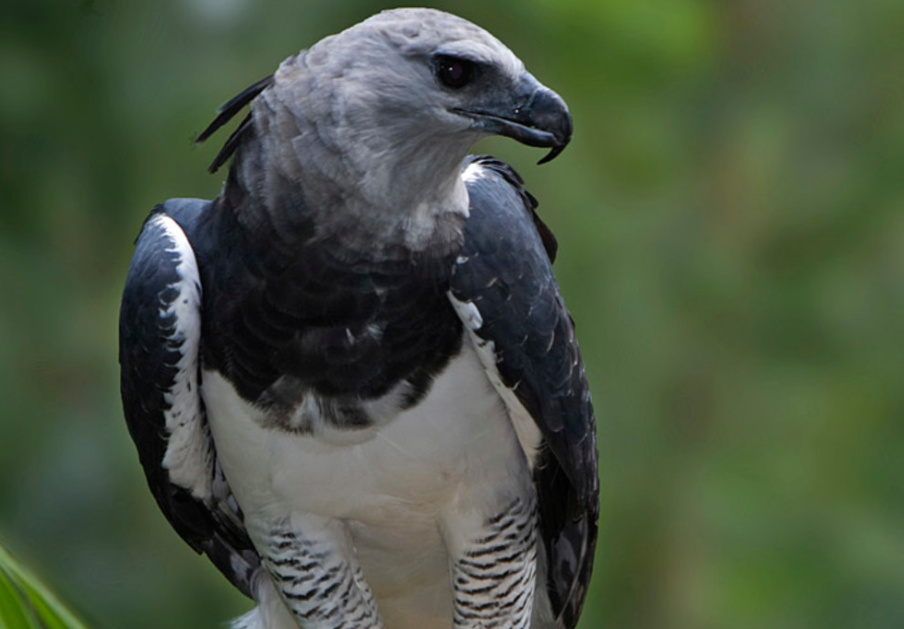
The Harpy Eagle, scientifically known as Harpia harpyja, is worldwide one of the most powerful and largest eagles among raptors. Its unique talons, especially the rear one, measure between 4 and 5 inches, which is similar to the size of a grizzly bear’s claws. These talons are designed to crush bones in a single grip, giving them enough power and ability to lift prey to its own weight.
Characteristics
Harpy eagles are unique and top predators that prey on various mammals such as monkeys, rodents, opossums, and sloths. Harpy eagles are silent hunters, often sitting still for hours or gliding silently across the forest in search of their prey.
With a wingspan of 6.5 feet (2 meters), they save energy and wait patiently for prey to come close. This means that it doesn’t always fly for long distances, and additionally, they don’t often wander and stalk their prey. When hunting for their prey, they always lift small mammals not exceeding 8 kg.
Location
It is commonly found in Central and South America and got its name from the Harpies of Greek mythology, which were characterized by violent death from sudden spirits that portrayed gruesome women with the bodies of birds, including the body, wings, and talons. Across the Americas, the Harpy has been admired and deeply respected as a divine creature.
Things to know about the breathtaking Harpy Eagle
This harpy eagle lives mainly in Central and South America’s rainforests that are sparsely populated, usually at heights of 600 to 2000 meters. During feeding, they prefer perching close to the ground for easy hunting.
This terrifying bird species has three main colors, including white, black, and grey, blending with varying shades that define its beauty. Both sexes share similar tones, but in terms of gradation, young birds are lighter than adults. This means that colour intensity varies, where mature ones seem darker and young ones lighter.
The Harpy Eagle can adjust its facial disc feathers to enhance hearing by lowering or lifting them to receive direct sound waves. It has excellent eyesight, which is 8 times sharper than that of humans, and catches prey by flying and swooping in to target their prey under the forest canopy.
These unique birds are monogamous and live 35 to 45 years. Bonded pairs stay together for a period ranging from 25 to 30 years in one territory. They always prefer places with tropical rainforests that have tall trees and can also attract their prey.
A pair of harpies reproduces every 2-3 years and lays between 1 and 2 eggs, with a brooding period that may last for 2 months. During this period couples parent together for the safety of the young ones.
Harpy eagles create large nests from sticks, about 30-50 meters high, containing over 300 branches, or even more. Due to invasion from insects and parasites, these harpy eagles regularly add fresh twigs of trees for cleanliness.
In terms of size, female harpies are larger than males, and a mature female harpy eagle is capable of grabbing and lifting prey weighing up to 10 kgs in flight without landing. This shows how strong these bird species are.
On average, they consume 800 grams of food per day; this means that there is no need to hunt daily. On a good day for a large hunt, prey is stowed in tree canopies and can sustain them in a couple of days.
Unlike other predators, like Martial Eagles, jaguars, and Golden Eagles, which adapt their diets, Harpy Eagles appear less flexible. More still, it is widely recognized as an ecological steward, indicating that its presence showcases a balance of the ecosystem.
Vocalization
This species is quiet outside the nest, where adults make weak, sad screams. Males make high-pitched calls when incubating, while females’ calls are lower. As nestlings grow, they become more vocal, making alarm sounds and various noises in response to threats.
National Symbol
Besides its majestic stature, strength, and ability to balance the ecosystem, the harpy eagle is a symbol of pride for many countries worldwide. It is Panama’s national bird, represents the Colombian Air Force, symbolizes biodiversity in Ecuador, appears on Venezuelan currency, and inspired Fawkes in Harry Potter.