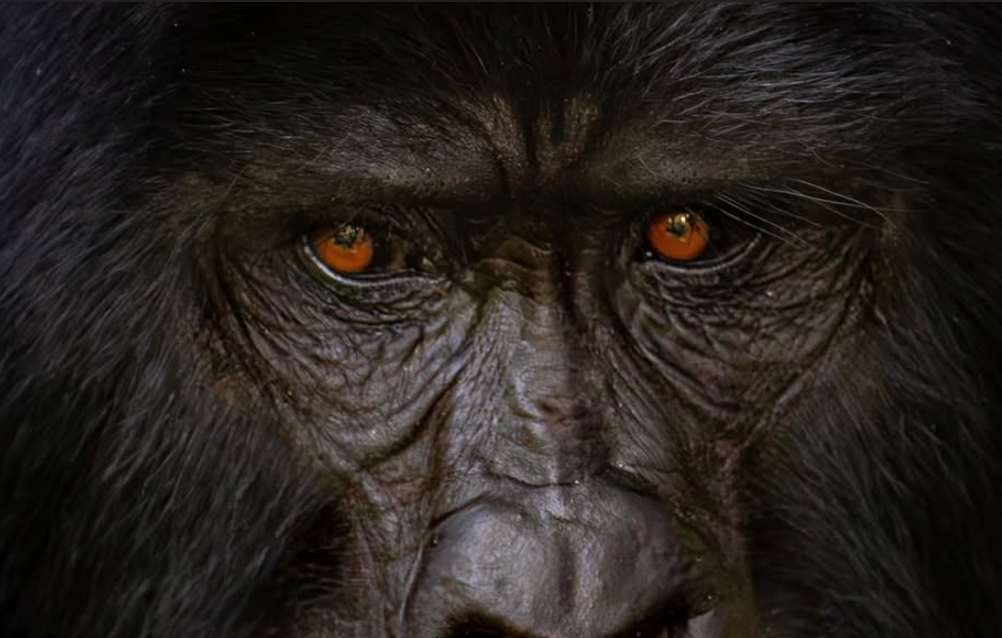
The Gorilla Life Cycle: All Stages from Birth
The gorilla life cycle begins before birth, with a pregnancy that lasts about eight and a half months. Female mountain gorillas can give birth at any time of the year, although births often take place at night. Gorillas reproduce slowly, which is one reason their populations can take a long time to recover when their numbers decline.
Female gorillas usually give birth once every four to six years. They have a short fertile period each month, and after giving birth, a mother will typically not reproduce again until her young gorilla becomes more independent. Throughout her lifetime, a female gorilla may give birth to around two to six offspring.
Infant Gorilla (Birth to 3–4 Years)
A newborn gorilla is called an infant. At birth, it weighs approximately 1.8 kilograms and depends almost entirely on its mother for food, warmth, protection, and care. Like human babies, infant gorillas feed on their mother’s milk during their early years.
As they grow, they gradually learn to sit upright, crawl, and walk. By around three to four months, they begin to develop better control over their movements. Their mothers carry them during the early months, and as they become stronger, they learn to cling to their mother’s body and eventually ride on her back.
Even as they become more active, young gorillas continue to depend on their mothers for several years. They may remain close to their mothers until around four to six years of age.
Infant gorillas can also face serious dangers. For example, when a new dominant male takes over a group, he may sometimes kill infants that he has not fathered. This behaviour is linked to competition for reproduction and can put young gorillas at risk.
Juvenile Gorilla (4–8 Years)
Between the ages of four and eight, gorillas enter the juvenile stage. At this point, they become more independent and spend much of their time exploring their surroundings, playing with other young gorillas, and learning social behaviours from older members of the group.
Juvenile gorillas are energetic and curious. Through play and observation, they develop the skills they will need as adults. Although they can carry out many activities on their own, they still benefit from the protection and guidance of the group.
Their bodies continue to grow during this stage, and their strength gradually increases. However, they have not yet reached full physical or sexual maturity.
Adolescent Gorilla (Around 8–15 Years)
As gorillas approach adulthood, they enter adolescence. During this period, their bodies grow larger, and they begin to show more adult characteristics. The timing of maturity differs between males and females.
Female gorillas generally reach sexual maturity earlier than males and may begin reproducing during their teenage years. As they mature, they may remain with their original group or move to another group.
Young males develop into what are known as blackbacks. They have dark hair on their backs and continue to grow in size and strength. Some males eventually leave their family group and may live alone or form relationships with other gorillas before becoming dominant adults.
Adult Gorilla and Silverback Stage (Around 12–15 Years and Older)
Male gorillas continue to mature until they develop a distinctive patch of silvery-grey hair across their backs. When this feature appears, they are known as silverbacks. This change often begins when males are around 12 years old, although full maturity may take longer.
Silverbacks are usually the largest members of their groups. A dominant silverback often leads the group, helps protect its members, decides when the group moves, and may father most of the infants born within it.
Female gorillas also become fully mature adults, although they do not develop the silver hair characteristic of mature males. They play an important role in raising offspring and maintaining the group’s social relationships.
Although silverbacks are often the leaders of gorilla groups, not every male becomes a dominant leader. Some remain subordinate or live independently.
Old Age and Lifespan- The Gorilla Life Cycle
As gorillas grow older, they may gradually become less active and lose some of their physical strength. Their health and lifespan depend on factors such as food availability, injuries, disease, habitat conditions, and protection from human activities.
In the wild, gorillas commonly live for around 35–40 years, although some live longer. In captivity, where they may receive regular veterinary care, a suitable diet, and protection from predators, they can live into their 40s or 50s.
Older gorillas remain an important part of their social groups because they have years of experience and established relationships with other members.
Conclusion
The gorilla life cycle includes several stages, from infancy and juvenile development to adolescence, adulthood, and old age. Each stage plays an important role in a gorilla’s growth, behaviour, and survival. Because gorillas reproduce slowly and take several years to raise their young, protecting them and their natural habitats is essential for the long-term survival of these remarkable animals.