The African Spoonbill
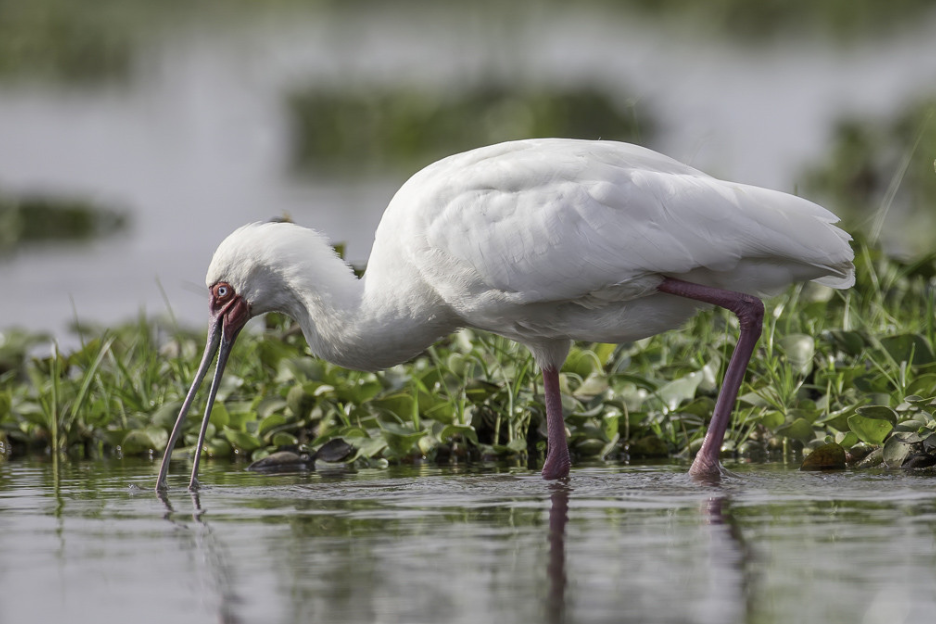
The African Spoonbill is a unique wading bird that standout among water associated birds because of their unique bill. As the name suggest, their bill is in shape of a spoon which makes it totally different from that of other birds. The African Spoonbill is a wading bird characterised with white plumage or pale pink depending on the location, long legs that enable them walk through water in search for food.
To many people especially nature lovers and birdwatchers, their odd shape bill actually makes sense and seems pretty handy to have. This unique spoonbill seems much easier to scoop around with compared to the normal pointed bill. Its bill makes clacking sound especially during feeding.
Feeding
They are not that pick during the time of scooping and normally feed on smaller animals, aquatic living organisms such as fish, insects, larva, shellfish among others. The spoon shaped part of their bill is very sensitive in the way that it can feel even the little living organisms such as fish and invertebrates they feed on.
Additionally, the spoon-shaped bill is packed with mechanoreceptors for tactile feeding. Hydrodynamics research shows the spoon tip can shed vortices that lift tiny fish and invertebrates off the bottom, increasing capture odds.
They are good at scooping up smiles with their iconic spoon shaped bill, perfectly designed for scooping food that makes total sense in the wild. This makes nature quite amazing and full of incredible details and perfect adaptations.
Habitats- The African Spoonbill
Since they are water related birds, they prefer habitats near water sources such as riverine, swamps, water channels, river banks and lake shores. In Africa, they can be seen in areas such as in the northern Zulu land areas near the Hlihluwr River in South Africa around Kazinga Channel in Queen Elizabeth National Park, Limpopo River, River Okavango and out side Africa, they can be seen in Florida, eastern part and South Carolina in the United States of America along the Edisto beach especially with Roseate Spoonbill species (platalea ajaja), Zeeland although occasionally seen.
The are massive with a robust body compared to other small wadders, but still hard to miss as they can stretch to the height of 90cm which is approximately 35.4 inches. Both the male and the female look alike but are not born with this spoon shaped bill. Instead, they are born with a short beak that develops into a spoon shaped bill as time goes by. The spoon like shape is visible by the time they leave the nest.
Breeding
The usually breed in colonies from late March through September. The females lay between 3 to 5 eggs in the months of April and May. These eggs are incubated by both parents for about 29 days. It’s very rare to see a breeding colony because spoonbills due to their shyness and secretive nature they usually move individually.
Even hanging around occurs when they are far from human presence or safari car, however on a lucky day you can come across it and enjoy the sighting of this spectacular bird species with its stunning spoon shaped bill.