Chimpanzee Photography in Kibale Forest National Park
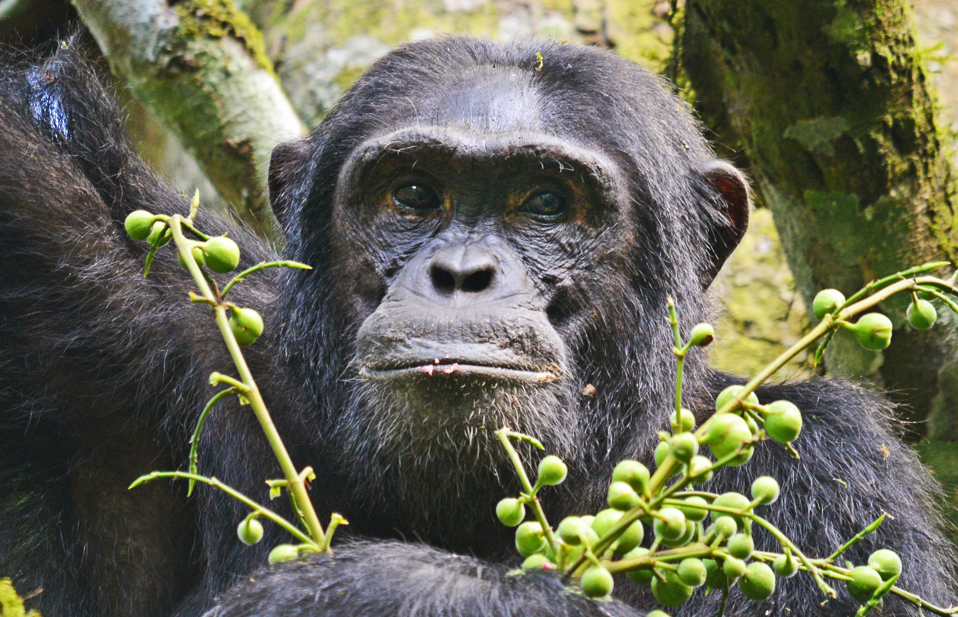
Are you a wildlife photographer or a nature enthusiast planning chimpanzee photography in Kibale Forest National Park? Chimpanzee photography is one of the most rewarding primate encounters in the park, offering nature lovers and photographers an unforgettable opportunity to capture stunning images of our closest relatives on earth and tell their beautiful stories to the world through the lens. Kibale Forest National Park is one of the best destinations in Africa to have a close encounter with these awesome creatures. It has the highest numbers of chimpanzees in Africa, which provides a 99% chance of encountering chimps in their natural habitats, attracting thousands of travellers across the globe to visit the park.
The park is situated in western Uganda, approximately a 5- to 6 hours drive from Kampala, the capital city of Uganda. The park has over 1,500 chimpanzees, with over 6 habituated communities fully accustomed to human presence. This provides wildlife photographers and nature enthusiasts with exceptional opportunities to capture intimate portraits, dramatic action shots and their fascinating social interactions at close range. Whether you are a professional wildlife photographer or an enthusiastic beginner, a chimpanzee photography safari in Kibale Forest National Park offers an unforgettable chance to capture powerful images while embracing nature.
Chimpanzee Photography Experience in the Park.
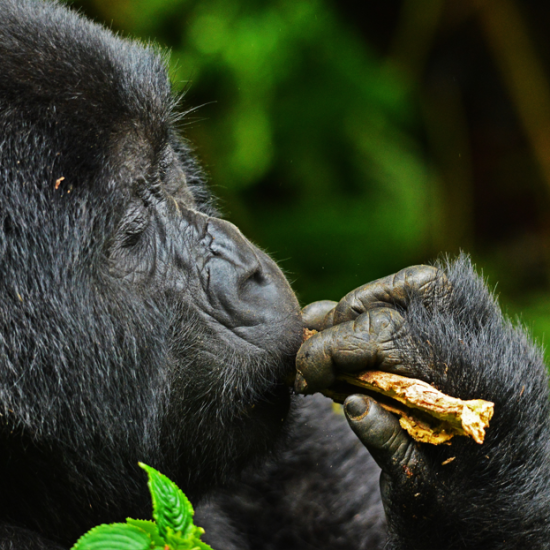
Chimpanzee photography in Kibale Forest National Park requires participants to obtain a chimpanzee trekking permit, and the trek begins with a briefing on the dos and don’ts of the activity. Later, they are divided into groups of a maximum of 8, and each group meets their assigned park guide, who ensures their safety and gives insights about the park’s inhabitants encountered. Travellers will move into the dense tropical rainforest in search of chimps, and the duration for chimp trekking is between 2 and 4 hours, depending on their movements as they keep on moving from one place to another. Participants are given one hour to observe them, and photographs will maximise the one hour given to them. For better results, patience is equally important, as the best photographs often come from waiting quietly for natural behaviours to unfold. They will have an opportunity to capture them feeding, playing from tree to tree, mothers taking care of the young ones, just like humans, since they share 98% of human DNA.
How to get a Chimpanzee Photography Permit in Kibale Forest National Park.
Photographers and nature lovers should know that they need to obtain a chimpanzee trekking permit. It is an official document issued by the Uganda Wildlife Authority, which allows them to come up close to our closest relatives on earth. Travellers can get the permit directly from the Uganda Wildlife Authority or through Caracal Explorers, a trusted travel agency. A chimpanzee trekking permit costs $ 300 for non-foreign residents, $200 for foreign residents, $100 for the rest of Africa and 180,000 UGX for East African citizens. There are low-season permits which cost $200 for non-foreign residents and 150 for $200 foreign residents.
What to Pack for Chimpanzee Photography in the Pack.
Travellers planning their chimpanzee photography in Kibale Forest National Park have to pack the necessary items which will enable them to have a memorable photography experience. They should carry the necessary items for better results and a memorable safari experience, like a camera with excellent low heat performance and no flashlights, a telephoto lens (80-200mm or 120-500mm) for capturing sharp, high quality images, extra batteries, memory cards, a waterproof backpack, and a rain cover to protect their equipment from unexpected rainfall. Don’t forget to carry comfortable waterproof hiking shoes, a rain jacket, insect repellent, sunscreen, a water bottle, a brimmed hat, long-sleeved shirts and trousers, energy snacks, a power bank for charging devices, a headlamp, a waterproof backpack to protect your gear, and a waterproof cover.
Best Time to do Photography.
Nature lovers and photographers can visit the park for photography throughout the year, and the best time depends on an individual’s travel plans. The park experiences two seasons: the dry season and the wet season. The dry season is the most suitable period for photographers to visit the park, which is from December to November and June to September. During this period, the park receives little to no rainfall, and it’s less muddy and slippery, which makes searching for the magnificent chimpanzees very easy and capturing clear shots. Travellers can also visit during the rainy season, which runs from March to May and October to November. During this period, the park receives enough rainfall and chimps don’t move deep into the forest in search of food.