Bird Species of Kibale National Park
Kibale National Park is a premier birding destination with over 372 bird species recorded, according to the park statistics. Despite being known for its distinctive primate species, with the highest population of chimpanzees, Kibale Forest National Park is also a haven for bird species, including forest birds, wetland birds, seasonal birds, and the Albertine Rift endemics.
Kibale National Park is home to the green-breasted pitta, one of the most sought-after birds that attracts many bird lovers on a Ugandan birding safari. The park houses 6 of the Albertine Rift endemics, and these include the Collared Apalis, Dusky Crimson Wing, Blue-headed Sunbird, Black-capped Apalis, Purple-breasted Sunbird, and Red Woodland Warbler.
Additionally, the park also inhabits 4 unique and endemic species of birds, and these include Nahan’s Francolin, Blue-headed Bee-eater, Masked Apalis, and Cassine’s Spinetail.
Most of the birding in Kibale Forest National Park is carried out at the Kanyanchu sector, preferably the Kanyanchu Chimpanzee Trail, Sebitoli, and the Bigodi Wetland Sanctuary. Therefore, to have an unforgettable birding experience in Kibale National Park, birding begins early in the morning when birds are more active searching for food.
Bird Species of Kibale National Park
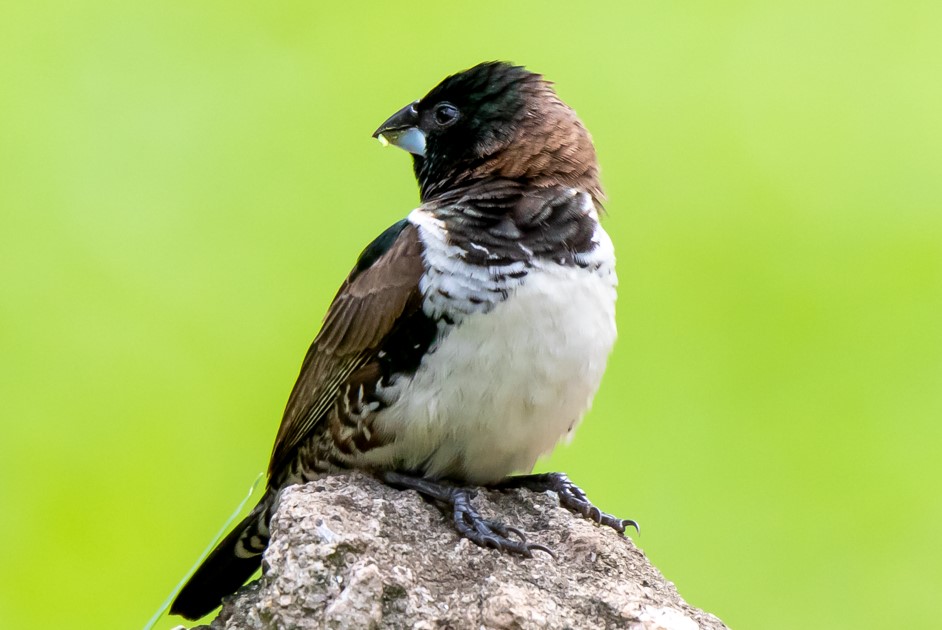
Birds to see in Kibale National Park include the Narina trogon, square-tailed nightjar, plain nightjar, fan-tailed widowbird, hairy-breasted barbet, yellow-spotted nicator, Chubb’s cisticola, piapiac, white-breasted Negrofinch, Piping hornbill, red-headed lovebird, chestnut wattle-eye, bare-faced go-away-bird, black-shouldered nightjar, many-colored bush shrike, and Doherty’s bush shrike. swallow-tailed bee-eater, African wagtail, blue-shouldered robin-chat, zebra waxbill, crowned eagle, black-crowned tchagra, alpine swift.
Blue-headed sunbird, brown-chested alethe, gray-headed olive-back, blue-headed bee-eater, scaly-breasted illadopsis, African pitta, red-chested owlet, African firefinch, black-eared ground thrush, green-breasted pitta, grey parrot, Abyssinian ground thrush, and African emerald cuckoo. The shy flycatcher, brown-backed scrub-robin, African shrike flycatcher, barn swallow, Cameroon sombre greenbul, African gray woodpecker, slate-colored boubou, black-tailed oriole, little greenbul, blue-throated roller, white-tailed blue flycatcher, and purple-breasted sunbird, Green-breasted pitta, crowned eagle, afed pigeon, dusky crimsonwing, black bee-eater, and black-capped apalis.
African pied wagtail, great blue turaco, black-bellied firefinch, yellow-rumped tinkerbird, cardinal woodpecker, western nicator, white-naped pigeon, and African pipit, Rwenzori apalis, masked apalis, and Cassin’s spinetail, and brown illadopsis. Papyrus canary, chocolate-backed kingfisher, superb sunbird, white-collared olive, speckled mousebird, eastern plantain-eater, papyrus gonolek,Yellow-breasted Apalis, Black-billed Barbet, Yellow-spotted Nicator, Double-toothed Barbet, Great Blue Turaco, and Red-fronted Tinkerbird.
How birding is conducted in Kibale National Park
Birding in Kibale Forest National Park allows visitors to see many types of birds, such as forest, migratory, Albertine Rift, and wetland birds. Activities begin early in the morning at the Kanyanchu visitors’ center with a briefing from trained ranger guides about various bird species and rules for birding.
After the briefing, a ranger and a birding guide lead visitors through trails to various birding spots, including Sebitoli and Bigodi Swamp.
Things to pack while on a birding safari
Pair of Binoculars
These help visitors to have clear sightings of birds that tend to be far in the dense canopies and those in distant areas.
A camera
This cannot miss out on your packing list since it is one of the essential tools birders frequently use to capture stunning photos of unique and striking bird species in Kibale National Park.
Hiking shoes
These shoes play a pivotal role during trekking and hiking when searching for bird species in the jungle. These hiking shoes must always be strong and waterproof due to the uneven terrain in some destinations.
Extra batteries
These are always used as backups when the initial batteries are done during birding in the field.
A rain jacket
Due to unpredictable weather conditions in Kibale Forest National Park, this rain jacket will help you from the rain in case it gets you in the forest since Kibale is a tropical rain forest.
A backpack
This helps birders and visitors to keep all their belongings and birding necessities safe while in the forest.
Sunglasses
These will protect you from the strong tropical sunlight. The sun hat can also be used; for instance, upon seeing the striking lovely bird, birdwatchers always take off their glasses for exciting and stunning views.
Best time to visit Kibale National Park
Kibale Forest National Park is home to many birds, visible year-round, but the best time to see them is from June to September. This period is the fruiting and breeding season, providing plenty of food and opportunities for birdwatching.
The dry weather makes the trails easy to walk. Tourists can also visit during the rainy seasons of March to May and October to November, which offer discounts on lodging for budget travelers. Although these times attract migratory birds, the heavy rain can make trails muddy and harder to navigate.