Why Did Menopause Evolve in Humans
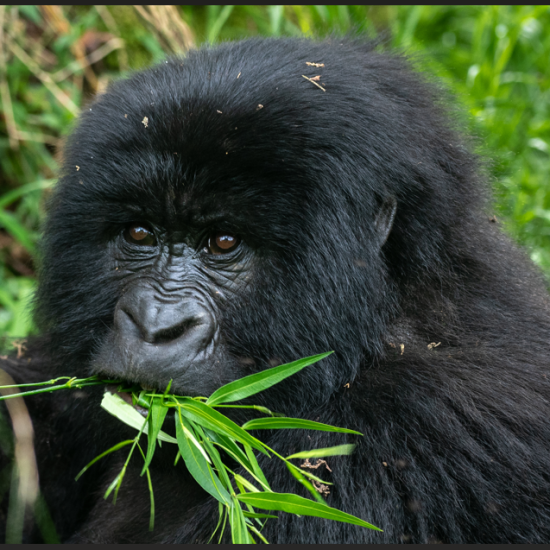
Why Did Menopause Evolve in Humans: The evolution of menopause in humans can be inferred from grandma chimpanzees. A female chimp’s level of relatedness to other members is initially low when she joins a new group, but it gradually rises as she breeds, and finally she has less to gain in a breeding competition with a younger female.
The only known species in which females survive long after they are unable to procreate are humans and certain whales. Chimpanzees should be added to the list, according to a new article published in the journal Science on Thursday. It also provides hints on the evolutionary requirements for women’s menopause.
“You would think there’s nothing else to learn about chimpanzees because they’ve been studied in the wild for a long time,” senior author Kevin Langergraber of Arizona State University told AFP. “I believe this research disproves that.”
Around age 50, humans endure a decrease in reproductive hormones and the irreversible cessation of ovarian activity, but the great majority of animal females continue to procreate till the end of their lives. In a similar vein, females of five species of toothed whales, including narwals and orcas, survive much into reproductive age.
Only a few species have this characteristic, and it’s unclear why natural selection would encourage it. The “grandmother hypothesis,” which suggests that older females go into a post-reproductive stage to use fewer resources and concentrate on increasing their grandchildren’s chances of survival, has been proposed by some scientists as a potential explanation.
Demographics and hormones
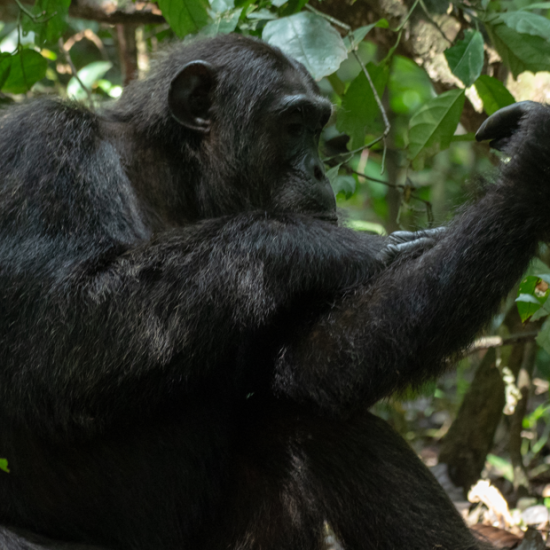
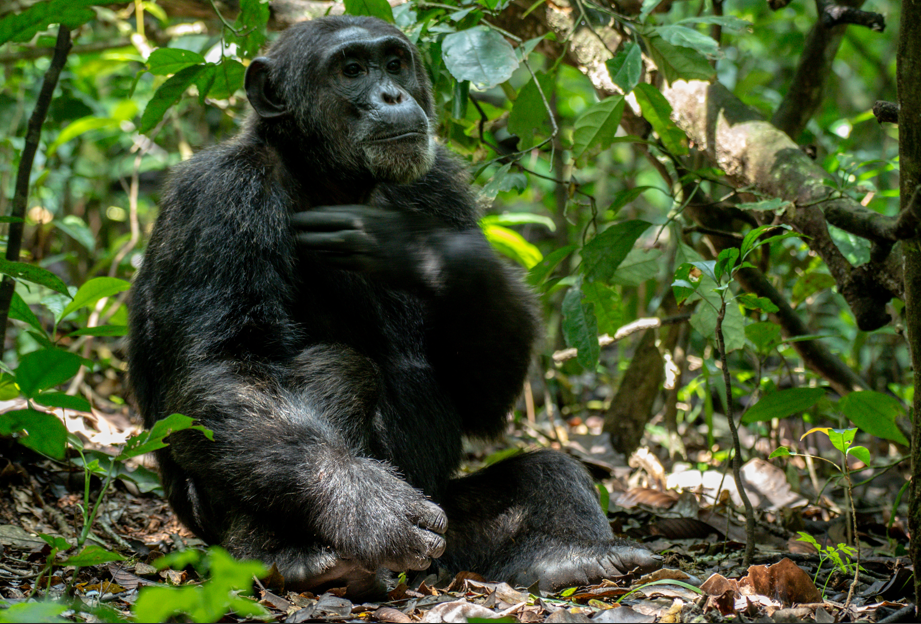
Why Did Menopause Evolve in Humans: Researchers looked at the fertility and mortality rates of 185 female chimpanzees in the Ngogo group of wild chimpanzees in Uganda’s Kibale Forest National Park from 1995 to 2016. The average percentage of an adult’s life that is spent in a post-reproductive condition is known as the post-reproductive representation (PrR), a metric that the team computed.
The death and reproductive rates of 185 female chimpanzees in the Ngogo group of wild chimpanzees in Kibale Forest National Park, Uganda, between 1995 and 2016 were investigated in the current study. The post-reproductive representation (PrR), a measure of the average percentage of an adult’s life span spent in a post-reproductive stage, was computed by the team.
The scientists linked the demographic data with hormonal status to rule out the possibility that, for example, an STD swept across the population and caused mass sterility among elderly females in the past. They analyzed the amounts of gonadotropins, oestrogens, and progestins in urine samples from 66 females with varying ages and reproductive statuses. They discovered that the hormonal patterns closely resembled those of human females going through menopause.
Chimps are not good grandmas
Why Did Menopause Evolve in Humans: According to the authors, there are still two viable explanations for why chimpanzees may go through menopause. In captivity, where they are shielded from disease and predators, wild animals have been found to have significant post-reproductive life spans. It’s possible that the Ngogo chimps experienced similarly exceptionally favourable conditions, such as the lack of leopards that were hunted to extinction in the area.
On the other hand, the isolated Ngogo chimpanzees may be more representative of past populations that were unaffected by human activities like logging and hunting. According to Wood, scientists must revise their evolutionary ideas of menopause if that is the case. In chimpanzee society, males who stay in the colony mate promiscuously, while daughters leave.
This indicates that the “grandmother hypothesis” won’t hold true because guys don’t know who this offspring is, and thus, grandmothers don’t know whose grandchildren are theirs. Rather, menopause may have developed to lessen competition between ageing females and their daughters for scarce breeding opportunities, according to Wood.
A female chimp’s level of relatedness to other members is initially low when she first joins a new group, but it gradually rises as she breeds, and finally, she has less advantage over a young female in the breeding battle. “The study is remarkable,” said Dan Franks, a researcher at the University of New York who has researched postmenopausal killer whales.
The first evidence of menopause in non-human primates in the wild is shown by this study. He said that the authors’ second view was “tantalising” in terms of its consequences for evolution. In the animal kingdom, bonobos and chimpanzees are our closest cousins, and the authors intend to investigate this subject further among them.