Uganda’s Three Horned Chameleon
Uganda’s Three Horned Chameleon: Uganda stands out as one of the few destinations in Africa with a unique ecosystem, harboring a diverse range of wildlife species, including reptiles, amphibians, invertebrates, and others. The three-horned chameleons are unique to the misty forests of Bwindi Impenetrable National Park, a UNESCO Heritage Site in southwestern Uganda.
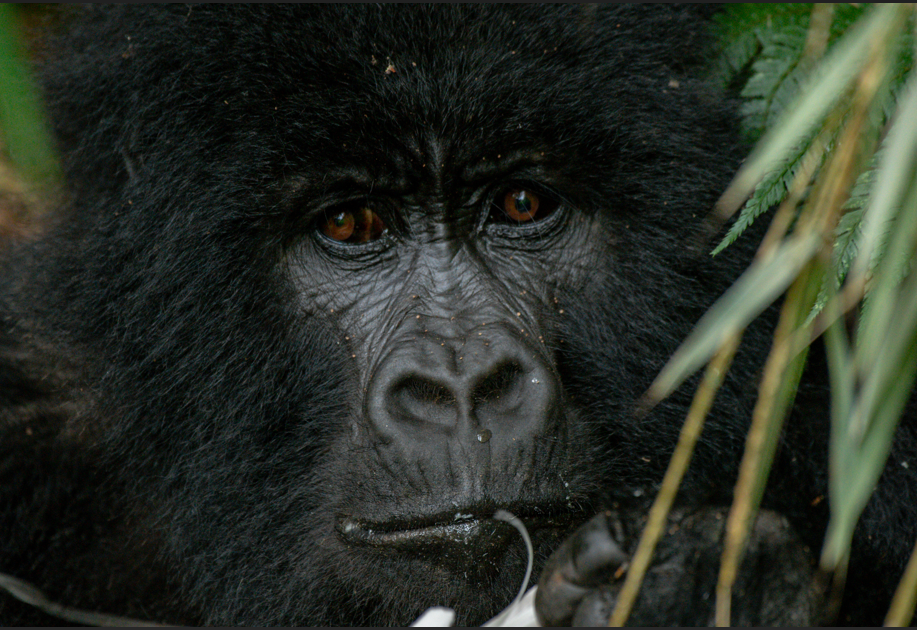
Due to Bwindi’s unique ecosystem, it draws tourists from different parts of the world, especially nature lovers, to witness the country’s magical wonders, including the three-horned chameleon. The park also hosts mountain gorillas, various primates, forest mammals, and over 350 bird species.
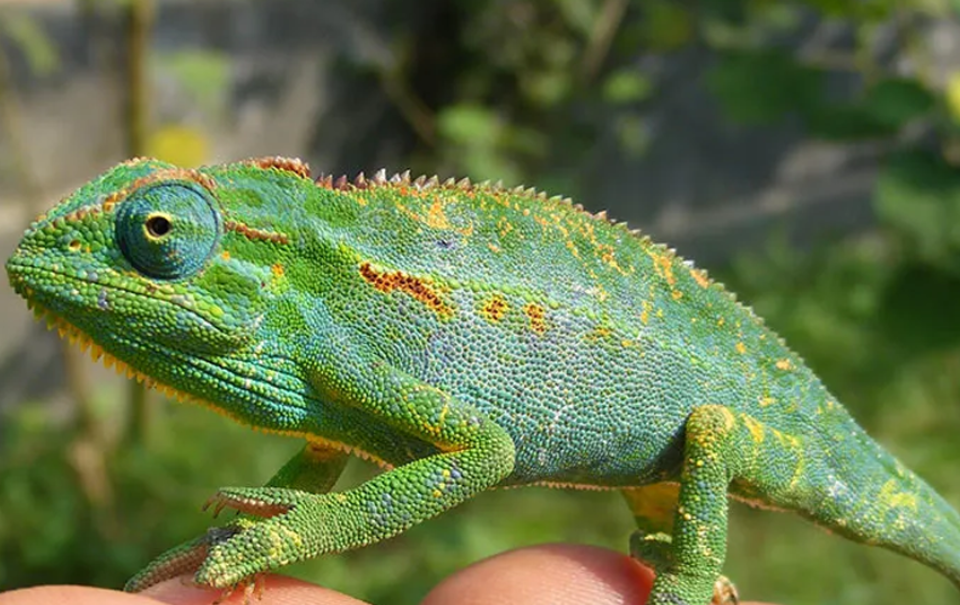
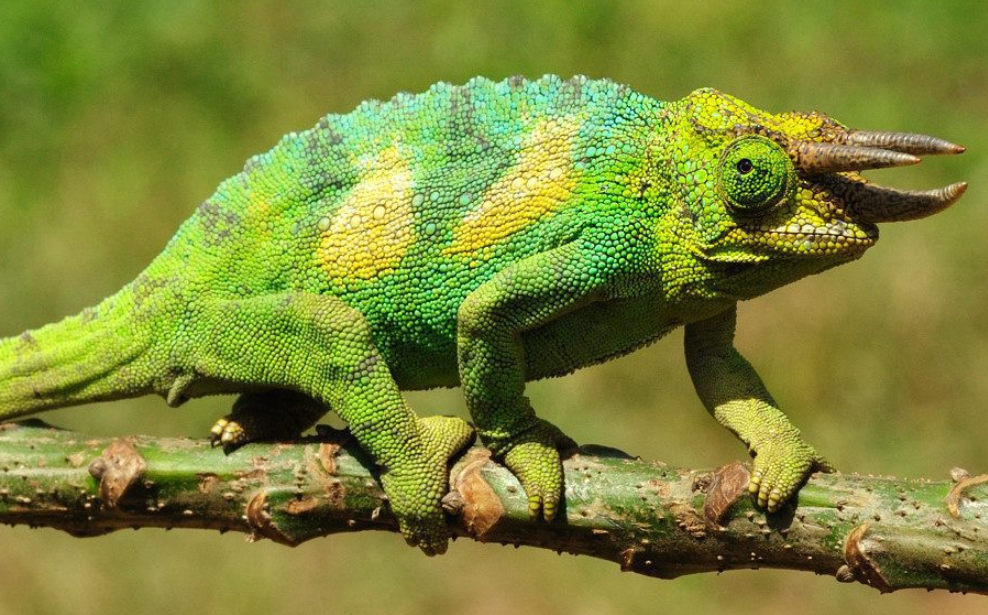
The Uganda’s three-horned chameleons, or Trioceros Jackson, have three brown horns on mature males’ foreheads. They change color for communication, hunting, and avoiding predators like birds and snakes.
Every part of its body has become specialized for a life of stealth among the branches.
Its toes are always compared to grasping pincers, as always witnessed by their movements, sticking on various plant surfaces.
Like any other chameleon, its eyes can rotate in 360 degrees, focusing on various objects at the same time.
The skin can change color purposely for camouflage or to signal emotions. Its tongue is like a missile, aimed at launching at its prey’s head to neutralize its defenses.
These species are so adapted to a life spent hunting for prey in various vegetation types such as shrubs, trees, plants, and others.
The tongue consists of three primary components: the sticky tip, the retractor muscles, and the accelerator muscles (musculus accelerator linguae). A mature three-horned chameleon can grow to a length of 30 centimeters with a life span of over 5 years.
What to know about Uganda’s three-horned chameleon
The Uganda’s three-horned chameleon is an endemic species found in East Africa at altitudes above 1,700 meters.
They are only seen in Uganda’s Rwenzori National Park, Bwindi Impenetrable National Park, and Mgahinga National Park, and parts of Rwanda and the DRC Congo.
The three-horned chameleons have eyes that rotate 360 degrees, allowing them to see in all directions around. This helps them scan their prey and predators in particular. Their unique tongues help them catch insects like grasshoppers and butterflies, among others.
Best time to see the three-horned chameleon in Bwindi
Bwindi Impenetrable National Park is open year-round, but the best time to visit is during the dry season from June to September and December to February, when trails are dry and accessible.
Accessing Bwindi Impenetrable National Park
Bwindi Impenetrable National Park is in southwestern Uganda. It is accessible by driving from Kampala or Entebbe, taking 8 to 9 hours in a 4WD. Alternatively, tourists can fly to Kigali, Rwanda, and drive 3 to 4 hours to the park.
You can reach Bwindi Impenetrable National Park by booking flights with Aerolink Uganda from Entebbe or Kajjansi to Kihihi airstrip or Kisoro airstrip and after connecting to the park headquarters by road.
Accommodation in Bwindi Impenetrable National Park
Bwindi Impenetrable National Park offers various accommodation options for visitors on safari, including budget, midrange, and luxury lodges. Notable options include Four Gorillas Lodge, Nkuringo Bwindi Gorilla Lodge, Volcanoes Bwindi Lodge, Buhoma Lodge, and many others, catering to different preferences and budgets.
For tourists to have a unique adventure safari for reptile tracking, such as the three-horned chameleon, and gorilla trekking safaris, you can book chameleon tracking in Bwindi Impenetrable National Park through a licensed tour operator and combine it with activities like gorilla trekking, birding, and the Batwa cultural experience.