The Dik-Dik
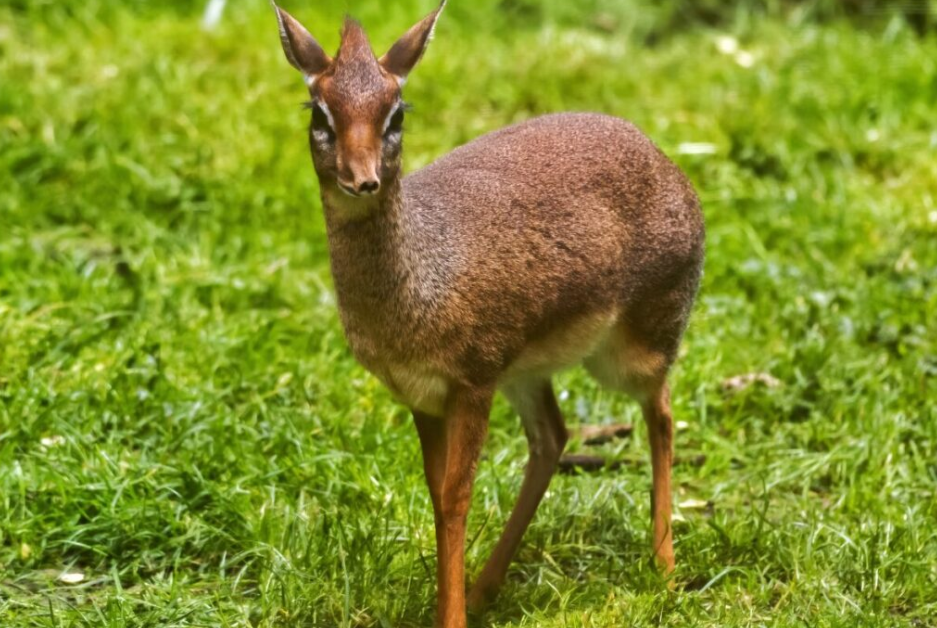
Kirk’s dik-diks are small antelopes scientifically known as Madoqua kirkii that have colors ranging from yellowish-grey to reddish-brown on their backs and greyish-white on their bellies. Males have stout, ringed horns hidden by hair on their forehead. They possess large, striking, dark eyes with a white ring, and below each eye are preorbital glands that release a dark secretion for marking territory.
Reproduction
Dik-diks form monogamous pairs, and conflicts with neighbors are uncommon. When conflicts happen, males confront each other briefly and then retreat. They mark their territories with dung and overlap the females’ dung. One theory for their monogamy is that it evolved as a response to predators, making it risky to seek new mates. Pairs spend about 64% of their time together, and males may seek extra-pair mating when possible.
Females reach sexual maturity at six months, while males mature at 12 months. The female dik-dik carries her calf for 169 to 174 days and can give birth once or twice a year during the rainy seasons. Unlike most ruminants, dik-diks calves are born nose first, with their forelegs beside their body. At birth, females weigh about 560 to 680 grams, and males weigh 725 to 795 grams. Mothers nurse their calves for six weeks, but only for a few minutes at a time. Young dik-diks have a 50% survival rate and must leave their parents’ territory by seven months, with fathers driving away sons and mothers driving away daughters.
Habitat
These dik-diks are categorized into 4 species of tiny antelopes from the genus Madoqua, all situated in Southern and Eastern Africa. They commonly prefer both savannah and woodland environments ranging from open woodland, open savannah plains, and riverine to arid and semi-arid, with dense thorn scrub to thickets. This helps them to hide away from predators, especially in thickets and shrubs. They are typically herbivorous, meaning that they feed on grass, fresh leaves, and buds.
They prefer areas with many edible plants like shrubs and can thrive in different habitats, including dense forests and open plains, as long as there is enough cover and limited tall grass. Typically, they live in pairs within territories of about 5 hectares, often in low bushes. They have runways for quick escape when threatened and can blend into their surroundings with their dusty-colored coats.
Survival
This antelope, known as the dik-dik, is shy and often hides in brush. It has strong sight, smell, and hearing. Instead of running from danger, dik-diks hide, especially the females, and make a shrill, whistling sound through their long snouts like “zik-zik” when scared, hence the origin of their name. These calls may as well alert other animals to predators. They mate for life and usually stay with their partners in low bush areas by dry, rocky streams. Being mostly active at night helps them avoid heat and conserve water.
Water Retention
These small antelopes obtain water from the plants they eat, as their bodies have evolved to cool without needing water. Instead, they need to eat more food per kilogram of body weight than larger hoofed mammals as part of their metabolic requirement.
They range between 30 and 40. 5 centimeters at the shoulder (12 to 16 inches) and 52 to 67 centimeters in length (20 to 26 inches). An adult dik-dik always weighs between 3 and 6 kilograms. It has a gestation period of 5 to 6 months with a life span of 15-17 years, especially those in captivity.
Population
Research reveals that there are over 971,000 individuals. The dik-dik population trend is stable over most of its range but quite reduced in some densely populated areas. Despite the common predators, there aren’t many obvious major threats to this species; the increasing agricultural settlements, expansion, and human populations affect their populations. However, their populations have become adaptable to the vegetation changes that have accompanied human growth and can exist in scrub and in commonly grazed areas.
Threats
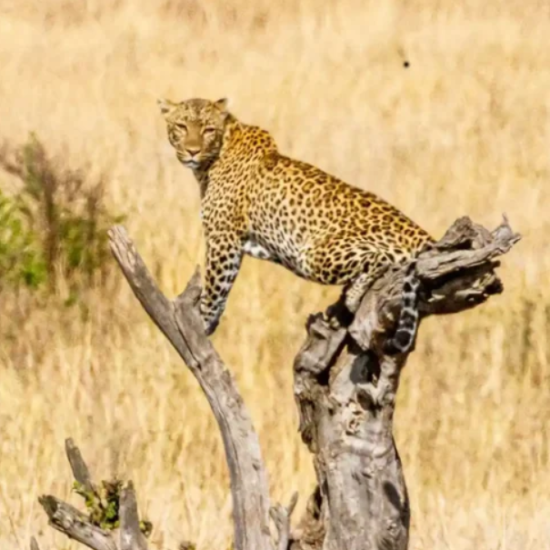
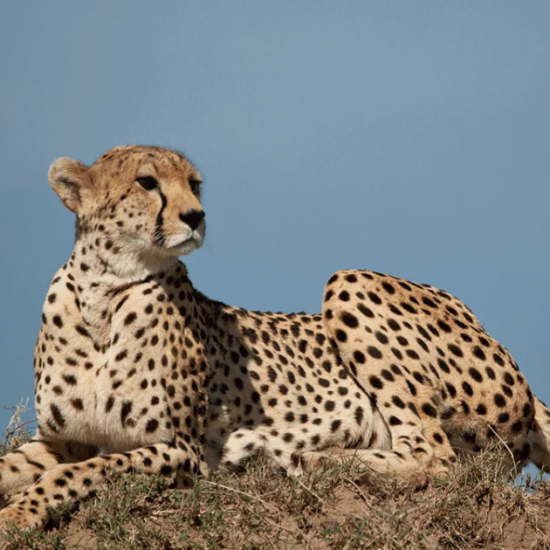
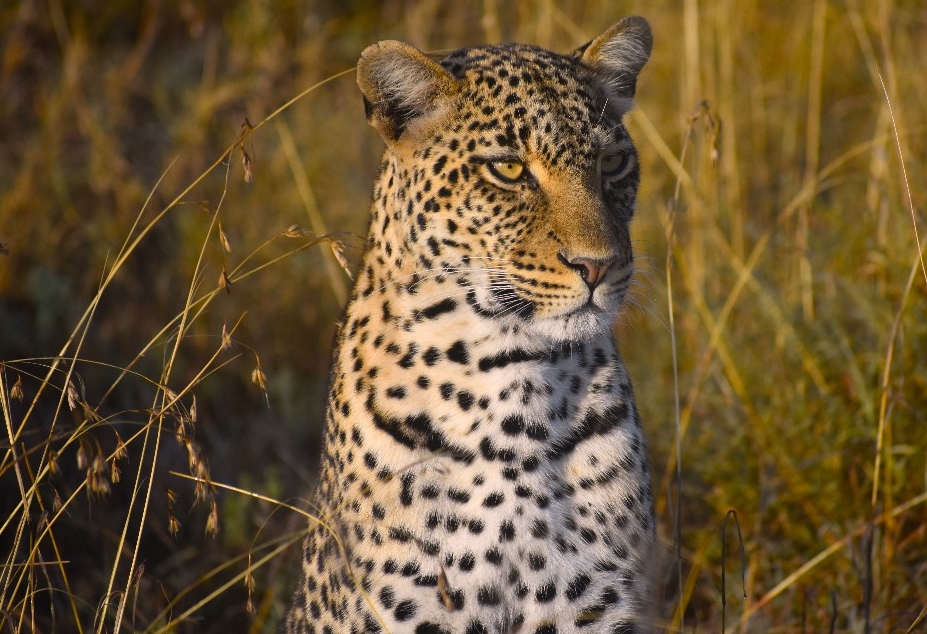
Like any other living mammal, this species also faces quite a number of threats, mainly from predators like lions, leopards, hyenas, jackals, wild dogs, and several other carnivores, and many others such as baboons, hawks, eagles, cheetahs, monitor lizards, and others. More still, man also stands out as another serious threat to the dik-diks.
People pose the greatest threat to this dik-diks species by hunting them mainly for food and setting snares. Small bones and hooves are used in traditional jewelry, and their skins are made into suede for gloves, whereby one hide can produce one glove at a time.