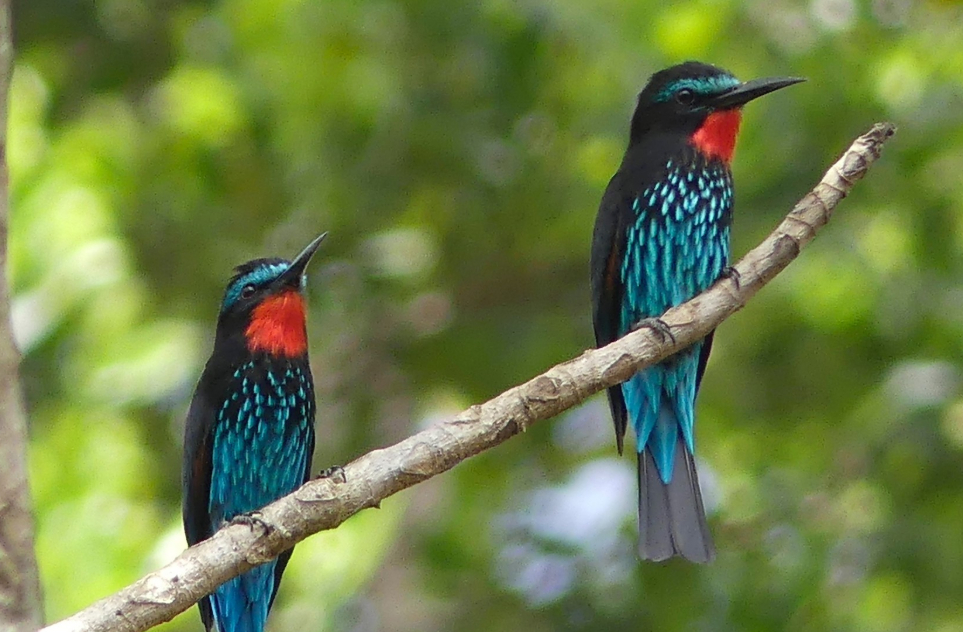
The Black Bee-eater
The Black Bee-eater (Merops gularis) is a stunning and colorful bird found in various regions of Africa, including Uganda’s diverse landscapes. This avian beauty is a member of the bee-eater family, known for its impressive soaring acrobatics and striking plumage. The Black Bee-eater’s physical appearance features a predominantly black body, adorned with striking or brilliant pops of chrome that set it apart from its counterparts.
Plumage
One of the most unique features of the Black Bee-eater is its striking turquoise crown, which contrasts brilliantly against its glossy black upperparts. This unique splash of color continues down the bird’s nape and extends to its elongated central tail feathers, adding an extra touch of beauty and elegance to its physical appearance. The Black Bee-eater also has a white patch on its throat, creating an appealing contrast with its predominantly dark facial mask.
In Uganda, the bird can be found in various habitats, mainly savanna grasslands and woodlands. It is particularly abundant in the country’s western and central regions, where it thrives in the lush vegetation and open areas that provide an abundance of insect prey. Its diet primarily consists of insects, particularly bees and other flying insects, which it captures mid-air with astounding agility while soaring in the sky.
Best Time to see the Black Bee-eater
One of the best times to observe the Black Bee-eater is during the breeding season, when they display their courtship rituals and nesting behaviors. Male Black Bee-eaters are known for their elaborate and exciting courtship displays, where they perform aerial acrobatics, antics, and show off their colorful plumage to attract potential mates.
Nesting
During the nesting period, the female Black Bee-eater scoops a tunnel in sandy or loamy soil for their nesting site. Within this tunnel, she lays a clutch of eggs not exceeding 5 in number, which she incubates while the male searches for her food. Once the chicks hatch, both parents take full responsibility for looking after the chicks, especially in turns feeding and caring for their offspring until they fledge and become independent.
Conservation
Conservation efforts are crucial to preserving the habitats of the Black Bee-eater and ensuring their continued presence in the countrys’s diverse ecosystems. Through responsible ecotourism and sustainable restoration practices, these stunning birds can be enjoyed by generations to come, enriching both the country’s biodiversity and the experience of avid birders and nature enthusiasts alike.