Rhino Restoration in Kidepo Valley National Park
Rhino Restoration in Kidepo Valley National Park: Uganda is an excellent spot for primate trekking tours, particularly gorilla safaris, but it’s also a great place to go on wildlife safaris, especially with the big five: rhino, elephant, lion, leopard, and buffalo. The days of Uganda having the rhino as one of the Big Five in the pristine wilderness of Kidepo Valley National Park are long gone.
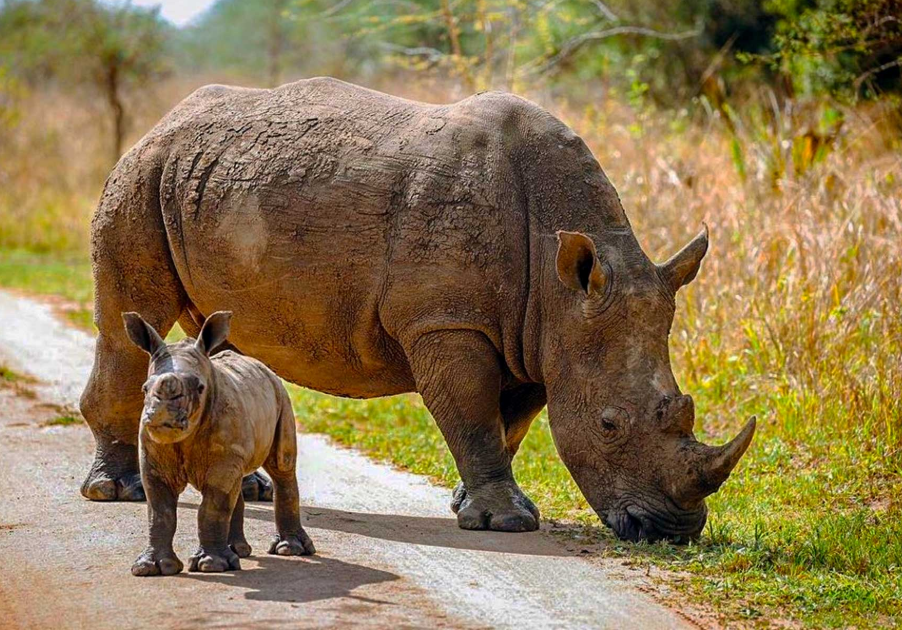
However, Ugandan wildlife authorities have successfully reintroduced rhinos into this remote distant protected area where they were previously poached into extinction as a result of conservation efforts. Conservationists view this as a significant step towards the recovery of species that are threatened by poaching.
Two southern white rhinos from a private ranch in an East African nation were reintroduced into the northeastern Kidepo Valley National Park on Thursday, March 19, 2026.
There were also two additional rhinos that arrived in metal containers. Due to poaching, Kidepo Valley National Park has been devoid of rhinos since 1983. However, since 2005, Ziwa Rhino Sanctuary, a private ranch in central Uganda, has been producing these massive animals. Over the years, that programme has been successful.
Mr Musinguzi James, the executive director of the Uganda Wildlife Authority, stated, “This moment signals the beginning of a new rhino tale for Kidepo Valley National Park, which is terrific news to help safeguard these great animals and keep them alive and perhaps have more kids.”
Rhino Restoration in Kidepo Valley National Park: “We are incredibly appreciative of our conservation partners, whose financial assistance, technical know-how, and logistical contributions have enabled us to reach this milestone.”
In order to move several rhinos from Ziwa Rhino refuge to another refuge inside Kidepo Valley National Park, which is more than 400 kilometres (250 miles) away, local wildlife officials worked with many conservation organisations, including Global Conservation. Infrastructure for managing fires, access roads, and fence lines are features of the rhinos’ new habitat.
Later this year, other rhinos, including those from Kenya are anticipated to be moved there.
According to Jeff Morgan, Executive Director of Global Conservation, the rhino translocation “shows that Uganda is stable again for tourism, national parks are being maintained, and Ugandans and international visitors can witness rhinos in their native context, which will be a remarkable feat.”
Although increased security measures have reduced instances over time, poaching is still an issue in Uganda’s protected regions. Because rhino horn goods are in high demand in some regions of Asia for keratin, medical purposes, status, and other uses, poachers target rhinos and kill them.
Similar to nails and hair, the rhino horn is composed of keratin, a structural protein without bone structure that is not attached to the skull.
Rhino Restoration in Kidepo Valley National Park: These horns develop from the skin rather than the skull, and they can grow back if they are removed or damaged. It is made up of densely packed keratin fibres that resemble horse hooves and human nails.
This keratin, which contains amino acids including tyrosine, lysine, arginine, cysteine, and histidine as well as the minerals calcium carbonate and calcium phosphate, is chemically complicated and contains enormous amounts of sulphur.
According to studies, goods made from rhino horn that are traded on illicit markets occasionally command higher values than gold.