Mountain Gorilla Photography Challenges in Bwindi
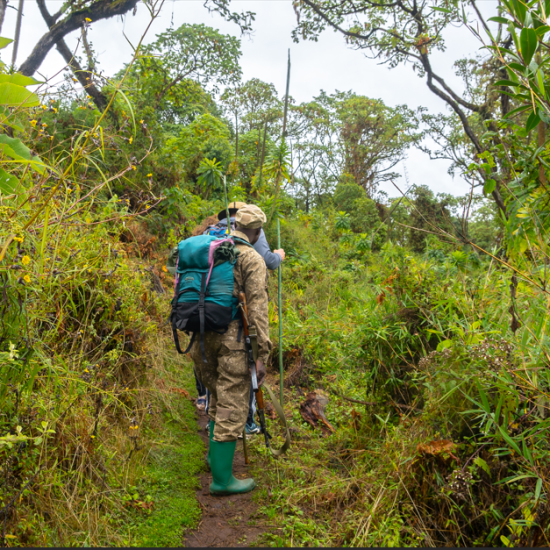
Mountain Gorilla Photography Challenges in Bwindi: Unlike Rwanda’s Volcanoes National Park’s gentle terrain, Bwindi Impenetrable National Park in Uganda offers something unique, demanding and rewarding for photography during gorilla tracking with no further explanation. It has a challenging land scape that is defined by steep slopes, lowlands, streams and rivers which at times may seem challenging to navigate but rewarding to nature lovers and photographers seeking exploration and a more diverse experience.
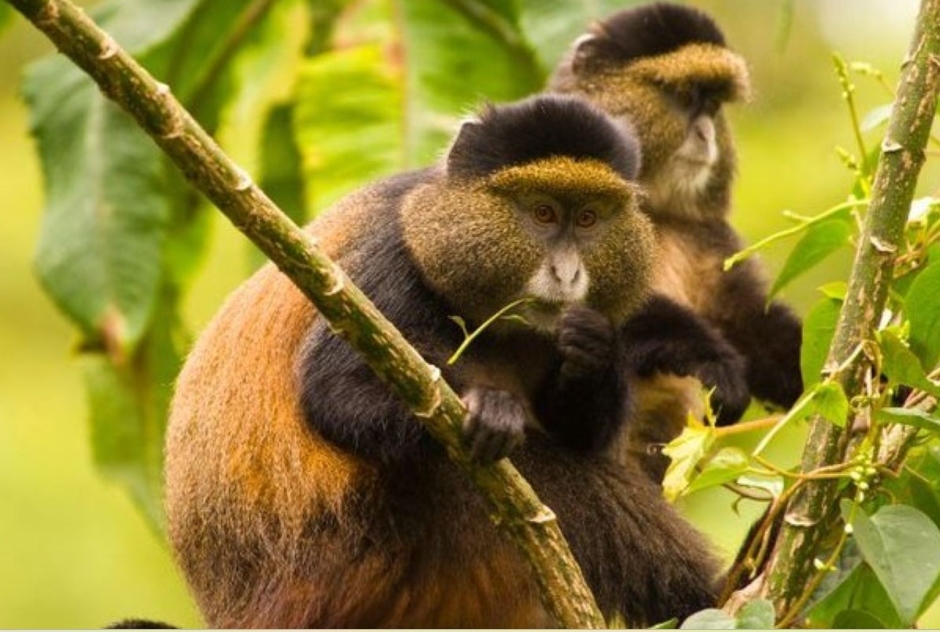
During the trekking session expect to have an encounter of diverse wildlife species that inhabit this dense jungle including numerous animals and birds, although the most famous residents are mountain gorillas.
These mountain gorillas in Bwindi alone contribute to almost half of the world’s mountain gorilla population, making them surprisingly a major draw. “Unlike the classic open savannah photography, where there is a little more freedom of managing distance, light and backgrounds, mountain gorilla photography is a little demanding since it requires or asks photographers to execute their work within very tight limitations”.
Remember during photography in these gorilla destinations, “You are on foot, moving through the dense misty jungle and with limited amount of time with these mountain gorillas.
In so doing you have followed the protocol in respect for the guides, trackers and the guidelines at all times for the safety of the gorillas and humans as well. And once the encounter is in progress, there is rarely such as thing as perfect position.”
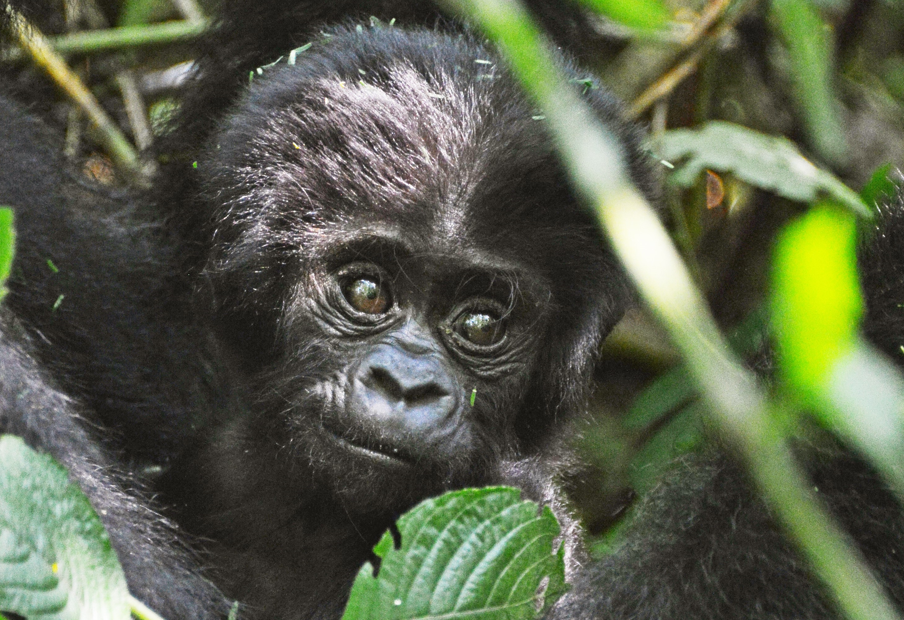
“When you encounter these majestic apes in the lush vegetation, the gorillas’ dark fur tends to absorb much of the little light available, leaving leaves and the surrounding branches to reflect the small patches of brightness.”
Mountain Gorilla Photography Challenges in Bwindi: This scenario can easily fool a camera meter where by if you expose too dark, the gorilla becomes a mere shape with out fine details and when you expose too bright, the surrounding jungle can quickly become more distracting.
Deep in the jungle, its dark and murky of dim, making the cameras sensitivity to light (ISO) an issue. However, some photographers recommend to the (ISO) the camera’s sensitivity to light’s speed and keep the image sharp while using a faster shutter speed.
This is because these gorillas are also mobile, they rest for some time and after they move to other places in search for food. At times they climb trees towards the forest canopy which may get a little challenging to take perfect shots in such an environment.
However, due to the steep slopes in Bwindi, photographers at times can climb to match the eye level with gorillas that tend to climb trees. This is indeed a physical challenge that involves steep surfaces, thick vegetation where every movement has to be careful and greatly considered but worth rewarding and an extraordinary experience.
Nevertheless, one of the technical challenges in Bwindi are the forest canopy that create deep pockets of shade, and the gorillas black fur makes the exposure quite challenging / important.
However, in such situations, photographers are always encouraged to pay attention to histogram and to avoid relying entirely on the back of the camera which may mislead you in dark surroundings. This is because your ultimate goal is to retain detail in the fur without making the whole image look unnaturally bright.
“One of the common mistakes in Gorilla photography is to expose for the entire scene and accept the gorilla as too dark.” Secondly is to brighten the entire image later in the post-processing, which is vital for flattening the atmosphere of the jungle and makes the green overwhelming.
Meaning, the better approach is usually more controlled and you need more exposure in the field to preserve detail, then careful post-processing to shape the final image.”
Most photographers say that post processing black fur is “often essential.” This means selectively lifting shadows on the gorilla, or using a touch of texture or clarity to bring out the fur. “Most times, darkening the background slightly can help restore the feeling of the forest while allowing the gorilla to stand out.”
Another important key element is composition. Photography in dense forests such as Bwindi Impenetrable National Park reveals that there are distracting tree branches that sometimes are hard to avoid.
Mountain Gorilla Photography Challenges in Bwindi: However, swaying from side to side, while waiting for the gorilla to turn its head, or choosing a tighter crop can lead to a stronger image.
“What is quite important during photography is Bwindi is patience. Regardless of the limited time factor, there is still value in slowing down. These mountain gorillas are articulative and expressive animals, but their best photographic moments are often understated and subtle.”
For instance, a moment of munching fresh leaves, a glance through the leaves, a slight turn of the face into a better light, a hand resting on a tree branch, a quiet moment between movements and many others. These are unique moments that create poses and images with emotions.”
Conclusively, this is the reason why such wildlife encounters are more effective with the assistance of the guide. Apart from the local trackers who locate and manage gorillas, guides are essential in guiding you about composition, exposure decisions, lens choice, composition, camera settings, background awareness and post processing knowledge, among others.