Facts About Leopards
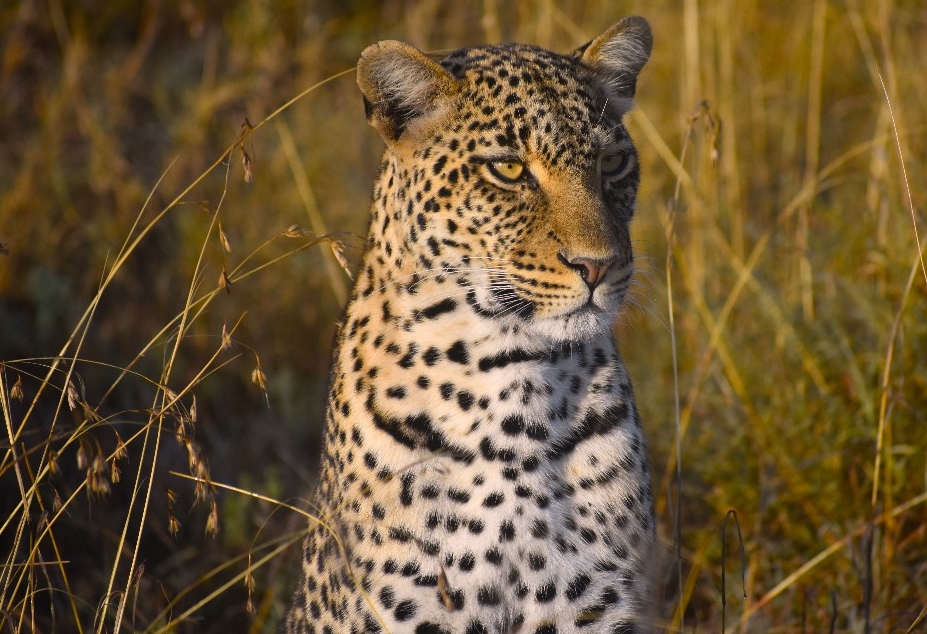
Facts About Leopards: Leopards (Panthera pardus) are among the deadliest members of the big cat family that are widely distributed across the world. These intelligent big cats are known for their stealth, strength, agility and vibrant spotted rosette coats. They have a golden fur, darker spots, a sleek, streamlined and muscular body with long legs and powerful jaws, enabling them to put down their prey, sometimes bigger than their bodies.
These powerful big cats share the same family with tigers, jaguars, lions, and others. They are residents in sub-Saharan Africa, Central Asia, northeastern Africa, and countries such as China and India, among others. Leopards derive their name from the Greek word leopardus, a blend of leon (lion) and pardus (panther). These leopards are categorized into 9 subspecies of leopards and vividly distinguished by the characteristics of their coats.
Leopard spots are called rosettes, attributed to their resemblance to rose flowers in terms of shape. However, baby leopards are born with faded spots, and as they get more mature, these spots will get more visible.
Leopard spots are distinctive in nature, pretty much similar to human fingerprints.This means that they have varying patterns, and no marks are exactly the same.
Facts About Leopards: Leopards are skilled climbers and often prefer to spend the day sleeping atop tree branches. This is because they always hunt at night, and during the day when the sun is high, they have to spend much of their daytime resting and sleeping under trees.
Leopards have also evolved to have this distinctive behavior of dragging their prey after killing it up on the tree, mainly antelopes that are even two times bigger than their size. These leopards will always do this unique kind of behavior in line to protect their kills and also make sure that they are safe from all other predators, especially the lions, spotted hyenas, and others.
This big cat is the most feline, the most dangerous, the most intelligent, and the most widespread predator among big cats on land.
Leopards are solitary animals and will always live and enjoy their secretive life alone except during the mating period. A female leopard will stay on heat for seven days, which is pretty much the period on when the couple of a male and a female will stay together. During the breeding season when females are nurturing their babies, you may as well find a female leopard accompanied by her cubs.
Leopards are nocturnal animals, meaning that these deadly cats are most active during nighttime.Like other cats, they always have excellent vision at night compared to grazers, whose sight is poor at night. They will use their exceptional night vision to move around searching for their prey in the process of conducting hunting. During the daytime, they will spend much of their time napping on trees to relieve their fatigue.
Unlike cheetahs, leopards are bigger in size with bigger, wider jaws, a special adaptation because this has always propelled them from going after the big prey and can actually bring down baby zebras, baby buffaloes, baby wildebeest, warthogs, and small bush pigs, among others.
Facts About Leopards: Leopards live in extremely diverse habitats such as deserts, savannah grasslands, forests, and even urban settings. They are unique with adaptable hunting and feeding behavior that allows them to adapt to various locations so long as they have vegetation cover such as forests and grasslands and prey animals.
Leopards are renowned for their outstanding strength and unmatched agility among big cats. This silent killer can put down prey bigger than its size and drag it up the tree, several meters above the surface.
They make distinctive, harsh, throaty roaring series often referred to as sawing. Like other cats both sexes make these distinctive sawing calls. They also make a wide range of growls, meows, hisses, snarls, and purrs.
Leopards also have a rich vocal repertoire. Their most recognisable call is a harsh, sawing-like sound produced by both males and females, especially during territorial communication. In addition to roaring, they can growl, hiss, meow, snarl, and purr, each vocalisation serving specific functions in communication, warning, or interactions during mating and rearing.