Elderly Gorilla Trekking in Bwindi
Elderly Gorilla Trekking in Bwindi Forest: Many travelers could be wondering if a gorilla trekking adventure can accommodate them regardless of their age and abilities. Well, travelers should be aware that gorilla trekking is not only for the young, teens, or energetic people. Therefore, travellers are advised not to opt for other wildlife encounters and miss out on their first priority because of age, physical ability, or other reasons.
However, travellers should know that the majority of the visitors who go for gorilla tracking are about 45 years and above. This means that you are never too old for tracking gorillas as long as you are fit to board a flight. To those who have been scared and wondering whether to travel with their parents or grannies for this memorable gorilla trekking experience, they need to know that it is always possible to do gorilla trekking so long as they can board a plane.
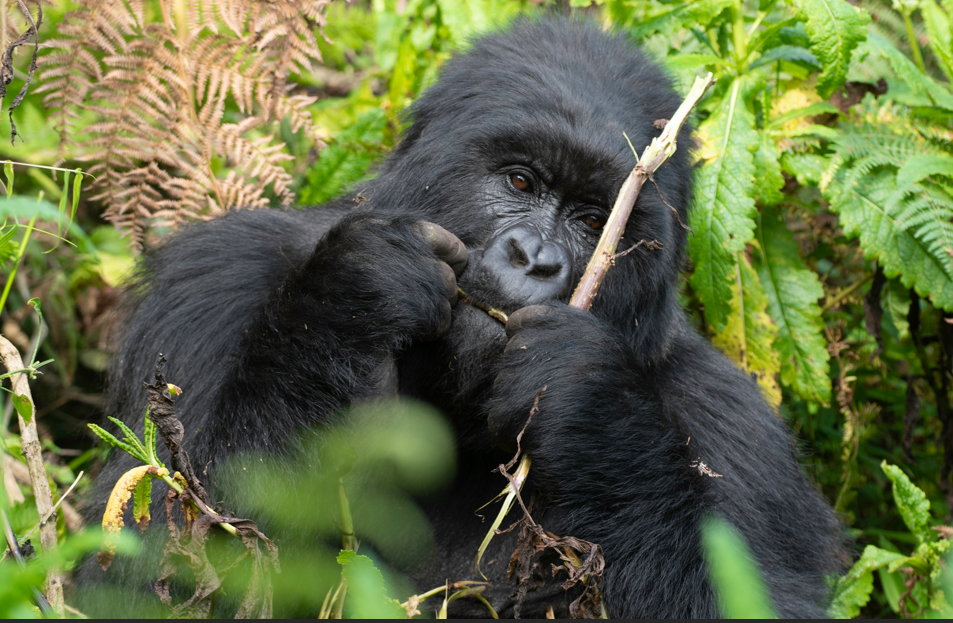
The gorilla trekking experience involves visitors searching for mountain gorillas in their natural habitat. On the day of tracking, visitors are advised to reach the information center by 7:30 for a briefing. On arrival at the briefing center, wardens and park rangers will check all the visitors’ passports and identify all those who need special attention.
There are always cases of trekkers who are 60 years and above but fit enough for the exercise; they will get assigned a nearby gorilla family for easy tracking. On the other hand, visitors who are 60 years old but in excellent physical shape can still request a longer trek during gorilla tracking to have a better experience of the jungle and total fun filled with adventure.
Travellers seeking adventure should not just accept easier and shorter treks because someone told them to do so. You should therefore get to know that there is a lot to explore in the jungle while tracking these gentle giants. Along the way, expect to come across breathtaking views of wildlife, flora, and fauna, including primates, bird species, moths, and butterflies.
Besides hiking ability and physical fitness, the other standard used for allocating gorilla families is the issuing out of gorilla permits. When the majority of the gorilla permits have been reserved or booked, it gets hard to have an easier trek. Visitors, especially the elderly, are advised to book their trips at least 3-4 months in advance so that they can get a gorilla group adjacent to a tracking point.
Visitors who participate in double gorilla trekking, which involves tracking mountain gorillas for more than one day, will definitely get assigned a different group from the previous. A total of 8 people is allowed to track a particular gorilla group in a day. This is done not to stress these mountain gorillas and, secondly, not to expose them to human diseases since they are prone to diseases.
Travellers should also note that it is also paramount to tell your tour agency about any individual fitness concerns or physical challenges before booking a gorilla trekking safari. This helps to give the tour operator prior knowledge and then plan accordingly using special equipment in line with the park authorities. More still, a special tour van/vehicle may also be allocated to you, porters, and sedan chairs if appropriate.
Your tour operator will attach the price of the sedan and the porters for both gorilla trekking and chimpanzee trekking tours for the elderly to the normal cost and share with you. These sedan chairs have four handles, a steel base, and seat belts and are used to lift the elderly or those who are unable to complete the trek.
Elderly Gorilla Trekking in Bwindi Forest: Alternatively, during gorilla trekking, the elderly may also be carried to the jungle using a stretcher made out of local bamboo sticks. Porters are assigned this task of carrying the elderly on a stretcher, where about 12 strong men alternatingly change in shifts of four at a time.
This means that four men carry the stretcher, and the other four take over, giving room for the first ones to rest. These porters are well versed with the jungle and the terrain since they are typical residents of the area. They are skilled in their work and will never let visitors touch the ground until they locate these mountain gorillas.
Upon seeing these gentle giants, you will spend a maximum of one hour studying these gorillas in terms of behavior such as nurturing, feeding, climbing, coupling, nesting, leadership, and others. After this unforgettable experience, porters will lift the elderly back to the starting point, where the driver guide will be waiting for you. Sedan and carrier chairs may cost about $400-$500 depending on the client’s weight.
This cost also caters for the porters who do the lifting of the client. Additionally, those who are concerned about their levels of fitness but are not elderly can also hire porters to carry their luggage, such as bags, recording devices, and other tools, as well as give a hand to visitors during the challenging hikes.
Porter’s fee stands between $15 and 25. All trekkers, whether fit or not, are given simple hiking clutches/sticks to support their mobility. However, the elderly may also need to come with their own hiking sticks. Hiring porters is one way of supporting the community, contributing to their income generation. Many of these porters are students looking for extra income to pay school dues and tuition and married men to cater for their families. Regardless, you will be making a profound impact on their lives.
During gorilla trekking safaris, it’s paramount to note that among the four major mountain gorilla trekking destinations, Bwindi Impenetrable National Park offers the best experience for the elderly. This is attributed to its strategic location, located in less mountainous areas.
Bwindi is not part of the magnificent Virunga ranges compared to the other three national parks.
Bwindi sits at a lower altitude, whose trails are relatively flat compared to Mgahinga National Park and Volcanoes National Park. Most of the gorilla families live on the lower ground, hence offering an easier hike. It is also vital to note that since Bwindi Forest Park has more mountain gorillas, it’s also a hub for more habituated gorilla families available for tracking.
There are now 22 habituated gorilla families in Bwindi and one family for habituation. Bwindi Forest Park has four gorilla trekking sectors, and these include Buhoma, Rushaga, Ruhija, and Nkuringo, each with its own gorilla families that offer unique adventure experiences. Therefore, travellers who may book a permit early enough, about 3-4 months or even more, can be assigned a gorilla family that isn’t far away from the starting point.
Elderly Gorilla Trekking in Bwindi: Conducting gorilla trekking in the Ruhijja sector offers an exceptional experience for the elderly because it has been observed that elderly travellers who trek in this sector get back much earlier compared to other sectors of the park. However, during gorilla trekking, it is important to note that the time taken to look for the gorillas is unpredictable regardless of which sector you choose to do the tracking. Lucky are those who get a gorilla family within 30 minutes of trekking from the starting point.
Before showing up at the starting point, it is paramount to read about the various gorilla families available in the different national parks to find out which one is more convenient and adjacent to the starting point of the trek. Always consult your tour agent operator to check if you can be allocated to the particular group.
The tour agent will advise you based on their experience and knowledge about a particular gorilla group and sector. This is because group structures keep changing annually, whereby what was easier to track a year ago may have shifted to a different location, which is further away from the park information offices.