Best Time to Secure Gorilla Permits in Uganda
Gorilla permits are commonly known as gorilla paperwork or documents that allow travellers to participate in the activity of tracking the endangered gorillas in the wilderness. The best time to secure gorilla permits in Uganda is to buy gorilla permits at least three to four months in advance. The Uganda Wildlife Authority is the government entity responsible for managing park operations and issuing gorilla permits in Uganda. Two types of gorilla licences are available from the Uganda Wildlife Authority: gorilla trekking permits, which permit a single trek and an hour spent with mountain gorillas. Gorilla habituation permits permit holders to spend one trek and four hours with mountain gorillas in an attempt to acclimatise the monkeys to human presence in their natural environments.
Location of Mountain gorillas in Uganda
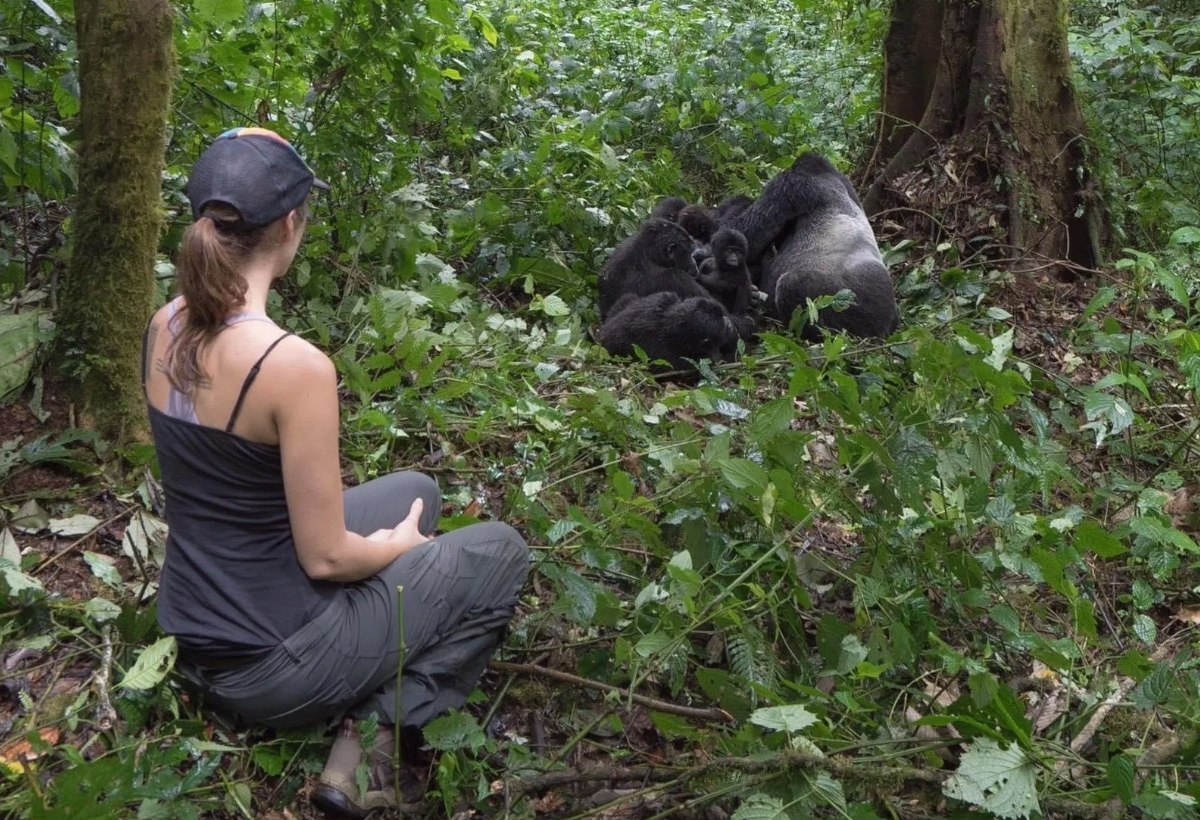
Mountain gorillas in Uganda are fortunate to be located in two national parks: Mgahinga National Park and Bwindi Impenetrable Forest National Park. With the highest number found in Bwindi Gorilla Park and the lowest in Mgahinga National Park, Uganda is home to the world’s largest population of mountain gorillas. Mountain gorillas inhabit the Nkuringo, Ruhija, Rushaga, and Buhoma areas of the Bwindi Impenetrable Forest National Park. The 31 square kilometres that make up the park are traversed by the Mgahinga mountain gorillas.
Travellers must have a valid gorilla trekking permit, which verifies that they are scheduled to trek that exact day, to be allowed to trek the 21 mountain gorilla families in Bwindi Impenetrable National Park and the 1 gorilla family in Mgahinga National Park. The sector where you plan to trek is indicated on your Bwindi gorilla trekking permit, which is verified during the briefing by park wardens at the sector offices.
A gorilla trekking permit or gorilla habituation permit is required for those who hope to see mountain gorillas in the national parks of Mgahinga and Bwindi Impenetrable Forest. Once you have contacted Uganda Wildlife Authority or a reliable local tour operator with the dates of your desired trip, you can obtain gorilla permits from them. The dates are used to determine whether permits are available; if they are, you will pay and receive your book of permits.
Best time to secure gorilla permits in Uganda
In Uganda, it is advisable to purchase gorilla permits at least three to four months in advance for various reasons. It is our belief that permits can still be obtained from the Uganda Wildlife Authority three to four months before to the gorilla trekking date, as opposed to the case when permits are sold out and you book later. For travellers to have the opportunity to trek in the areas of the park of their choosing, they must secure gorilla permits in Uganda three to four months prior to the gorilla trekking date.
The Uganda Wildlife Authority now distributes permits for gorilla trekking in each region, so if you make reservations in advance, you may specify if you wish to walk in the Mgahinga National Park, the Buhoma region, the Ruhija region, the Rushaga region, or the Nkuringo region. The optimum time to purchase a gorilla permit is not during the rainy season, when visitors who wish to hike gorillas can purchase a safari for even a few days. This is because there are not many tourists during this season because it rains a lot.
As you plan for the best time to secure gorilla permits in Uganda, approving these permits three to four months in advance facilitates appropriate safari preparation. After receiving confirmation that your permit has been obtained, you consider your travel plans, the lodges you will stay at, and the things you will bring on your safari. As soon as the permit is secured, you know you will be trekking, so you begin exercising in your local region to ensure you are in good enough shape for the trek.
How to secure gorilla permits in Uganda
Uganda Wildlife, the government organisation in charge of providing gorilla permits, or a reputable local tour operator, can be contacted to purchase gorilla permits in Uganda. The dates of the month and year you wish to travel should be included in your email correspondence to either of the two. The data is used to determine whether the permits are available; if not, you will be prompted to select alternative dates.
If you are fortunate enough to find gorilla permits available, you will receive an email with various banking information and the permit fee. You will transfer funds for the gorilla permit to the bank details you will receive. Once payment has been made, you will send will email a scanned copy of the receipt; once this is received, your gorilla permit will be scheduled. Passengers who make direct reservations with Uganda Wildlife Authority will pick up their permits at the Kampala offices.
Cost of gorilla permits in Uganda
Gorilla trekking licences at Bwindi Impenetrable Forest National Park and Mgahinga National Park cost $800 for non-foreign residents, $700 for foreign residents of other countries, and UGX300,000 for residents of East Africa. The cost of gorilla habituation licences, which are exclusively valid in the Bwindi Impenetrable Forest National Park, is $1500 for non-foreign residents, $1000 for foreign residents, and UCX750,000 for East African citizens.
The best season to trek mountain gorillas in Uganda
In Uganda, gorilla trekking is possible throughout the year, while certain seasons are more preferable than others. The greatest times to go gorilla trekking in Uganda are from June to September and from December to February, during the dry season. The dry season is ideal for gorilla trekking because it has little to no rainfall, which keeps the trekking paths dry, has low foliage, excellent views of the mountain gorillas, and accessible roads into the park.
During Uganda’s rainy season, travellers, especially those on a tight budget, can go gorilla trekking and take advantage of discounted park activities and affordable lodging options. To draw in the few visitors to the park, most items had their prices down. During the rainy season, which spans from March to May and October to November, there is little to no rainfall, which results in muddy and slippery hiking trails, dense foliage that obscures views of mountain gorillas, and poorly maintained roads that lead to the park.