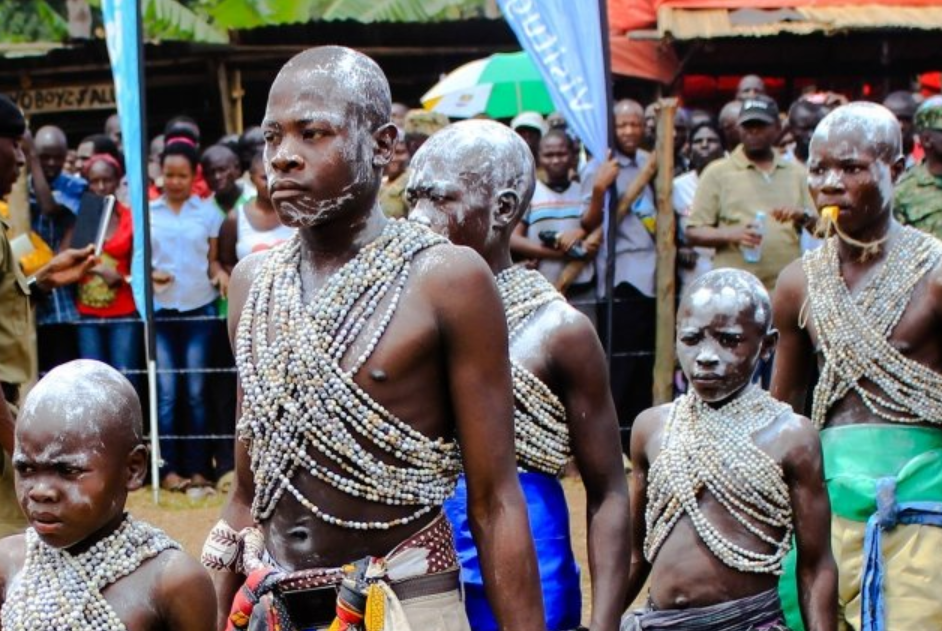
Who are the Chwezi People
Who are the Chwezi People: The Chwezi commonly known as the Bachwezi who are believed to be semi divine pastoralists existed between 1350-1500 AD. The chwezi have been surrounded with unclear theories with no clear conclusion among historians, about who the Chwezi were, their origin, their impact where they went and their present location. However, the Chwezi empire began collapsing before Wamara’s disappearance due to a combination of internal strife, external threats and environmental woes that eroded its power.
Myths About the Chwezi or Bachwezi
According to oral traditions from Ankole, Toro, Bunyoro Karagwe and Rwanda where the Bachwezi are claimed to have settled, assert that they were demi-gods. They are expressed as immortals in the way that even if they were born by men and women, they did not die, but simply disappeared. They are portrayed as having had one leg in this world and another in the underworld.
The Bachwezi are said to have assumed characteristics of human beings such as leadership skills. The first ruler of the Bachwezi, Ndahura, who ruled over a large empire called Kitara, is also venerated as the God of smallpox.
The Bachwezi are believed to have been luo ethnically (crazzolara, 1969). However, the various traditional attributes of the Bachwezi do not portray any connection between them and the Luo. It has also been asserted that the Bachwezi never existed at all except in the minds of the people (Wrigley, 1968). This makes the traditions about the Bachwezi absurd and yet they are remembered as traditional rulers of the Kitara empire.
Chwezi Descendants
Some historians believe that the Bachwezi might have been real people and that their descendants are the present day Bahima of Ankole, Bahuma of Bunyoro and Toro and the Batutsi of Rwanda. In appearance, they are believed to have been tall and light skinned. They were great sportsmen, magicians and hunters. Presently, the Bachwezi are worshipped in western Uganda by some people.
The Bachwezi are said to have ruled the Kitara empire after the Batembuzi. The era of the Batembuzi in Bunyoro and Ankore is conceived as a period of creation. The Batembuzi are said to have been the first people on earth.
Who are the Chwezi People: They are believed to have been superhuman because they did not die. It is believed to have simply disappeared into the world. The dynasty of the Batembuzi is said to have been founded by Ruhanga (the creator). Mythology notes that Ruhanga was succeeded by his brother, Nkya who was succeeded by his son, Kakama. Bada, succeeded his father, Kakama, and his son, Ngonzaki, succeded him.
Ngonzaki was succeeded by his son, Isaza, who was the last of the Batembuzi rulers. Before he disappeared into the underworld, Isaza is said to have impregnated Nyamate, the daughter of Nyamiyonga-King of the underworld, Isaza is said to have impregnanted Nyamate, the daughter of Nyamiyonga-king of the under world.
Nyamate gave birth to Isimbwa who in turn was the father of Ndahura, the first king of the Bachwezi. This tradition pre supposes that the Bachwezi were related to Batembuzi.
Location
The Bachwezi are said to have founded the ancient empire of Kitara. This vas empire is said to have covered parts of central, western, and southern Uganda and parts of western Kenya and northern Tanzania and Eastern Democratic Republic of Congo, (former Zaire).
Their capital is said to have been on Mubende hill, and then at Bigobyamugenyi in Masaka District. In all mythologies (traditions). Biog is linked with Mugyenyi who is said to have been a Muchwezi prince. Excavations at Bigo have revealed the existance of findings which are also associated with the ancient capital sites of Ankole and Buhaya, such as Bweyogerere and Bweranyangi respectively.
Who are the Chwezi People: Archeologists who have also excavated these historical sites, therefore have proved that the Bachwezi were real people. However, the exact extent of the Kitara empire has been challenged that it could not have stretched as far as is usually assumed.
What can be said is that the Bachwezi had a loosely organised empire, not very small but atleast not as big as is assumed-perhaps slightly bigger than the present central, western and southern Uganda, plus northwestern Tanzania, northern Rwanda and Eastern Congo. It was based in Bwera along the middle banks of River Katonga.
When the Luo invaded Bunyoro at the beginning of the 16th century, the Bachwezi are said to have migrated southwards and left the Luo to establish their Babiito dynasty to Continue their Kitara Empire. According to traditions, the Bachwezi disappeared to un known destination.
Some historians assert, however, that the Bachwezi might have absorbed within the local populations and might in effect be the present Bahima and Batutsi of southern Uganda. The actual truth perhaps is yet to be established. What is evident is that the Bachwezi were pastoralists and are said to have had some physical features similar to those of the Bahima.
When the Bachwezi left, Bwera territory was left to a Mwiru smith called Kihesi. Kihesi is said to have made a drum called Rushama from a waterbuck skin. Until recently, this drum was kept at Makore, a few miles from Bigo. Kihesi is said to have acquired the name of Bararemwa Kihasha Nantomu and established the Kingdom of Bwera.
What are the Chwezi People Remembered for?
Who are the Chwezi People: Despite the nature of their origin and presence being still open to question, their introductions and other attributes are still questionable. It is said that the Bachwezi introduced the cultivation of Coffee, long horned cattle, symbols of regalia, iron smelting skills, and games such as wrestling, omweso and the idea of Kingdoms or centralised states in Uganda.
Alot has been said for and against such assumptions because they are said to have to have inherited the Batembuzi dynasty. Wamala is said to have been the last King of the Bachwezi. Tradition says that Wamala and the remaining Bachwezi disappeared into a lake in Singo that is named after his name (Lake Wamala). Other historians simply state that the Bachwezi moved south and founded the Kingdoms of Nkore, Rwanda and the Bahinda states of Karagwe.