Buganda’s Kings Buried at the Kasubi Tombs
Buganda’s Kings Buried at the Kasubi Tombs: Historically, Buganda, originally known as Muwawa, was one of the strongest kingdoms in Uganda and Africa before European arrival. It boasts a rich history dating back to the early 13th Century and was one of the first civilized kingdoms in the region. The Baganda people belong to the Bantu-speaking group found in Southern Africa.
The first King of Buganda was Kintu, who married Nambi after impressing her father Ggulu, the god of the sky. Kintu is said to have disappeared into the Magonga forest instead of dying.
After Kintu’s time, many kings ruled the Buganda Kingdom, but their specific dates and details are unclear. Only Kabaka Suuna II, who reigned from 1836 to 1856, has well-documented dates. Traditionally, the Buganda kings usually built their palaces on hills for security against attacks.
Politically and strategically, this also allowed them to see approaching enemies and handle internal conflicts. After a king died, his body was buried in one shrine, while his jawbone was placed in another site, as it was believed that the jawbone held the spirit of the king.
Like any other African tribe, the Baganda believe that once someone dies, his or her spirit remains, and the departed Kabaka would communicate to his successors through a spirit medium. More still, when the Kabaka or a family member dies, an heir or successor is chosen immediately after burial. Several traditions and rituals are performed to appease the spirits of the deceased Kabakas including exchanging presents, sacrificing animals among others.
There are four kings buried at the Kasubi tombs:
Mutesa 1 (1836-1884)
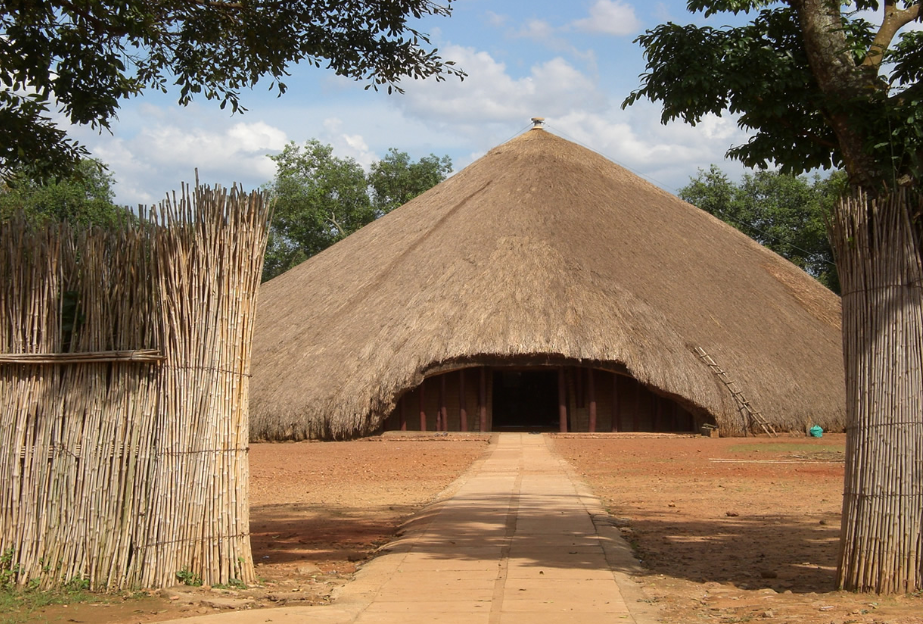
Buganda’s Kings Buried at the Kasubi Tombs: Mutesa I between 1836 and 1884, he was born around 1836 and became King in 1856. Mutesa 1 became the 35th Kabaka of Buganda whose body was the first to be buried in the Kasubi royal tombs. Prior, he built his palace almost in the same spot where the Kasubi tombs are situated. He was one of the most powerful kings with several wives than his predecessors.
After realising that his brothers were threat his rule, he instead imprisoned them in a large trench, were most of them got suffocated and died in the living him unchallenged. The reign of King Muteesa 1 happened at a time when foreigners had started penetrating Africa in big numbers especially in the eastern part of the continent. As a result, Mutesa 1 became the first king to be influenced by foreign cultures.
After getting into contact and interacting with the Arabs who had come from the East African Coast, searching for ivory and slaves, he turned to the Muslim faith. Since Mutesa 1 picked interest in these Europeans, further hosted John Speke -the first white visitor to Buganda in 1862 and Henry Morton Stanley in 1875. During this time, scramble for Africa was setting pace.
This inspired Mutesa 1 and allowed his Christian and Muslim foes to change his royal staff on condition that they never threatened his authority. In 1884, Mutesa 1 died and was laid to rest at the Kasubi tombs. However, before his death, he told his subjects not to take off his jaw bone for a separate burial. In so doing, he became the first king to deviate from an ancient custom.
Basamula Mwanga II (1867 -1903)
Buganda’s Kings Buried at the Kasubi Tombs: After the death of King Muteesa 1 in 1884, he was succeeded by his son Mwanga Basamula Ekeere 11. This was the last King (Kabaka) to rule a truly independent Buganda. Mwanga’s reign became Kabaka when the influence of foreigners had grown rapidly. He looked at the new religions of Christianity, Islam and other foreign religions as a serious threat to his rule.
Mwanga II ordered the killing of many Christians and Muslims, known as the Uganda Martyrs, during his father’s reign in 1886. This led to concern among his Muslim and Christian chiefs, who united to overthrow him. Due to this pressure, Mwanga fled into exile and joined forces with Omukama Kabalega of Bunyoro to resist the British.
However, his efforts failed, and he died in exile on an island in 1903. Before his death, he converted to Christianity and was named Daniel. His remains were returned in 1910 and buried at the Kasubi royal tombs, becoming significant for future kings.
Kabaka Daudi Chwa II (1896 – 1939)
After the death of Kabaka Mwanga 11, his successor was his one-year-old son Daudi Chwa in 1897. Daudi Chwa was assisted by the Christian regents till the age of 18. However, his reign was modest compared to the previous kings of Buganda. In 1939, Kabaka Daudi Chwa died, and was laid to rest at Kasubi Royal tombs, this portrayed a significance symbol of strength and reputation both spiritually and culturally.
Fredrick Walugembe Muteesa II (1924 – 1969)
Buganda’s Kings Buried at the Kasubi Tombs: After Kabaka Daudi Chwa 11, his son Mutesa II became king. A major conflict arose between Mutesa II and Sir Andrew Cohen over the 1900 Buganda Agreement, resulting in Mutesa’s exile in England. He returned in 1955 and became the constitutional president when Uganda gained independence in 1962.
Tensions with Prime Minister Dr. Milton Obote escalated, leading to an attack on Mutesa’s palace by government troops in 1966. Mutesa fled to England and died in 1969. His remains were later returned and buried at Kasubi Tombs in 1971.